
The quick answer
- An air purifier uses a fan and filters to pull particles out of the air in a room: dust, pollen, pet dander, smoke and mould spores.
- HEPA H13 is the filter to look for. H13 is tested to capture at least 99.95% of particles at the most penetrating particle size for the particles that pass through it. How much of your room it cleans depends on matching its CADR to the room size.
- Who gains most: allergy households, pet owners, smokers’ homes, busy-road homes and bedrooms. Customers with allergies often tell us the bedroom is where they notice it first.
- It doesn’t remove moisture. For condensation or damp you need a dehumidifier, and the AeraDry 25L 2-in-1 does both jobs.
- How to choose an air purifier: our 7-step guide.

Air purifiers are one of the simplest ways to keep the air in your home cleaner. They filter dust, pollen, pet dander, smoke and other everyday contaminants out of the air you breathe, giving you a fresher living environment for you, your family and your guests. Here is how an air purifier works, the benefits it can bring, who gains most, and how it differs from a dehumidifier.
1How an air purifier works
Put simply, an air purifier filters the air and removes dust from it. A fan draws room air through filters and sends cleaner air back out. Most common air purifiers use a HEPA filter, short for “high efficiency particulate air”. A HEPA H13 filter is tested to capture at least 99.95% of particles at the most penetrating particle size, which is why it is the filter of choice for dust, pollen, pet dander and smoke particles. It also helps with the overall smell of a household, from smoke and pet odours to cooking smells and the lingering smell of burnt toast, when it is paired with an activated carbon layer.
How much of the air in a room is cleaned depends on how much air the purifier moves, measured as its CADR (clean air delivery rate). Our 7-step guide to choosing an air purifier shows how to match one to your room.
2The benefits of an air purifier at a glance
Less dust
Fine dust and dust mite particles are caught before they settle on shelves and surfaces, which can mean less housework.
Pollen and hay fever
A HEPA purifier catches pollen that drifts in through doors and windows, for a calmer hay fever season.
Pet hair and dander
Pre-filter and HEPA together capture the hair and dander pets leave in the air.
Smoke and cooking smells
A carbon layer helps with smoke from cigarettes or burnt food, and everyday odours.
Mould spores
Spores that float in the air are captured by the HEPA filter. (It does not stop mould growing on damp surfaces: see section 8.)
A fresher bedroom
In a bedroom, a purifier can help keep the air feeling fresher by capturing airborne particles.
A good purifier works quietly in the background, catching the things you can see settling on shelves and the things you can’t. By capturing airborne dust, pollen and pet dander, a suitable purifier can help make the bedroom feel fresher and reduce exposure to those airborne triggers. Cleaner air is also a good start if you want to protect your family’s comfort and look after your home’s hygiene: a HEPA filter captures dust and airborne bacteria-sized particles, which helps stop them spreading from room to room.
3Who benefits most?
Allergy and asthma households often notice the difference first, because dust and pollen are two of the most common triggers. Pet owners, homes near busy roads, smokers’ households and anyone who wants a fresher bedroom also get plenty out of one. As we spend so much of the night in the bedroom, it is often the best place to start. A purifier also makes your home more welcoming to friends and family with allergies.
4Creating a calmer bedroom: 3 steps
The amount of allergens in a bedroom is often understated, and it matters where you spend a third of your life. If allergies or asthma are a concern, these three steps from our earlier bedroom guide are a good place to start:
- Reduce dust mites. These microscopic creatures live in mattresses, carpets, upholstery and curtains, and their droppings are a common trigger. Wash bedding hot (60°C where the fabric allows), vacuum with a HEPA-filter vacuum cleaner, let the bed air before you make it, and favour hard flooring over carpet where you can. No home is ever completely mite-free, so aim to make conditions harder for them.
- Control humidity and temperature. Dust mites thrive in warm, humid rooms, so keep the room cool and aim for humidity under 50% (30% to 50% is a good range). A dehumidifier helps; on high-pollen days, keep windows closed and let the purifier work. An air conditioner can keep a hot bedroom cool and filter dust from the air passing through it. Its standard washable filter does not replace a HEPA purifier for fine airborne particles. See our portable air conditioner guide.
- Purify the air. A HEPA air purifier captures airborne particles, and a low fan setting can help keep bedroom noise down. Keep the home smoke-free.

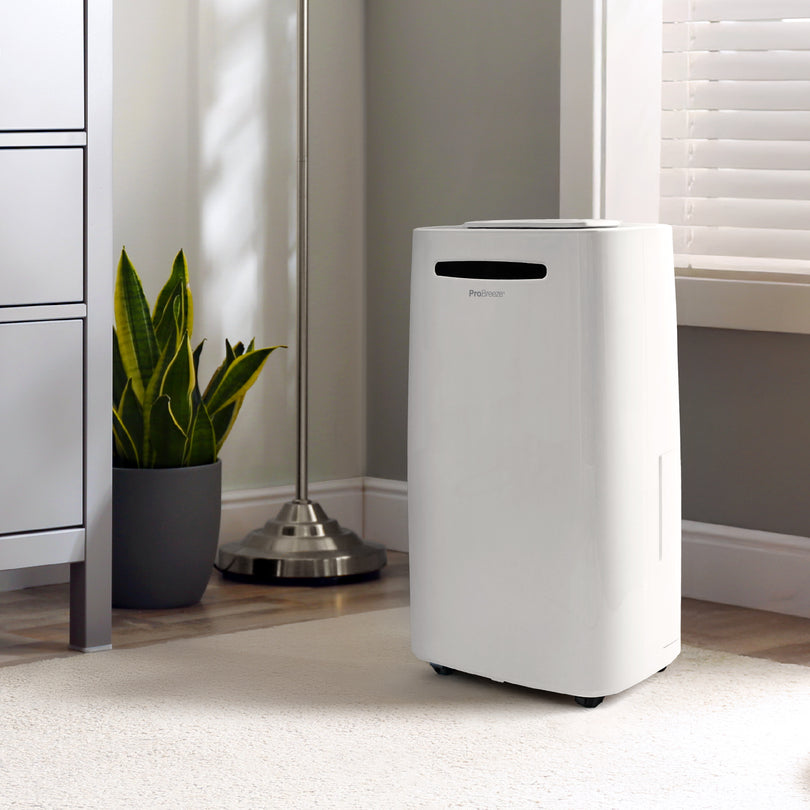
The AeraDry 25L 2-in-1 is designed for exactly this combination: it purifies with a HEPA 13 filter and dehumidifies in the same machine, with a night mode for quiet running. If you are choosing for a bedroom, see our guide to quiet dehumidifiers for bedrooms.
5Improving indoor air quality at home
Allergies and asthma are common, and an international paediatric study by Italy’s National Research Council (CNR) found that about 6% of children aged 6 to 8 had asthma and around 25% had symptoms. Our earlier indoor air quality article also quoted the share of allergic adults as rising to 30–40%. Allergic asthma is the most common type, triggered by inhaling allergens such as pollen, dust mites and moulds. Asthma control starts at home, so these simple habits help alongside a purifier:
- Let the air circulate. Open the windows when you can, outside of high-pollen days, for good circulation.
- Check the humidity. A good level is between 30% and 50%, which helps prevent the build-up of mould. A dehumidifier makes it easy to control, helping you stay on top of condensation and damp.
- Vacuum often. The best vacuum cleaners collect twice the dust and are much better at keeping particles from leaking back into the room. It matters most if you have pets, as pet hair adds to air pollution and pollen can ride in on their fur.
- Add an air purifier. Consider one if you have allergies, small children or breathing problems, live near a busy road or industrial site, or are exposed to smoke or odours you cannot control. Choose a HEPA filter for dust, pet hair and smoke particles, and add activated carbon for odours and gases, which HEPA does not filter.
- Know the usual hiding places. Pay attention to mattresses, pillows, bedding, carpets, soft toys and damp areas, and remember that pets can carry pollen indoors.
- Add houseplants with care. Houseplants release oxygen during photosynthesis and can make a room feel fresher. Avoid overwatering and remove dead leaves to discourage mould. They are not a substitute for ventilation or a HEPA purifier.
- Take your shoes off at the door. It stops chemicals, pollen, dirt and dust being carried through the house.
6HEPA, carbon and the filters that matter
The filter is the heart of the machine. A HEPA filter captures fine particles such as dust, pollen and pet dander, and an activated carbon layer helps with smoke and cooking odours. Some air purifiers also have an ioniser, which releases ions that make particles drop out of the air. Our AeraDry 2-in-1 dehumidifier and air purifier uses a HEPA 13 filter, rated to capture at least 99.95% of particles at 0.3 microns, so it is ideal for households with allergies. Our earlier standalone five-in-one air purifier used a five-tier filter system, including activated carbon to absorb contaminants and impurities. Keep any filter working well by changing it as the manual advises. See the buying guide for a full comparison of filter types.
7Air purifier or dehumidifier?
They solve different problems, and plenty of homes need to deal with both.
| Air purifier | Dehumidifier | |
|---|---|---|
| What it does | Filters particles out of the air | Removes moisture from the air |
| Helps with | Dust, pollen, pet dander, smoke, smells, airborne mould spores | Condensation, damp, musty smells, drying washing |
| Doesn’t help with | Moisture, condensation, mould growing on walls | Dust, pollen or smoke (beyond a basic filter) |
| In one machine | AeraDry 25L 2-in-1 | AeraDry 25L 2-in-1 |
If your main problem is condensation on windows, a damp feel or mould coming back, you need to lower the humidity. Read our guides to dehumidifiers for condensation and mould and treating and preventing damp, or compare models in our 13-step buying guide. If you want both jobs in one machine, the AeraDry has an air quality sensor and smart app control.
8Will an air purifier help with mould?
A HEPA purifier can capture airborne mould spores, which helps keep the air you breathe cleaner. It does not stop mould growing on a damp wall or window frame, though, because mould needs moisture. For that, tackle the cause: keep humidity in check and fix any leaks, as our damp guide explains.
9Choosing one, and getting the best from it
An air purifier only works well if it is matched to the room. A model that is too small has to work harder to keep up, so check the recommended room size and CADR, and choose for the largest space you will use it in. Our guide to buying an air purifier walks you through room size, filter types, noise and the extra features worth paying for.
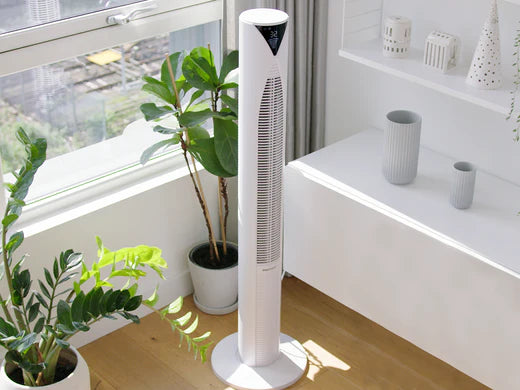
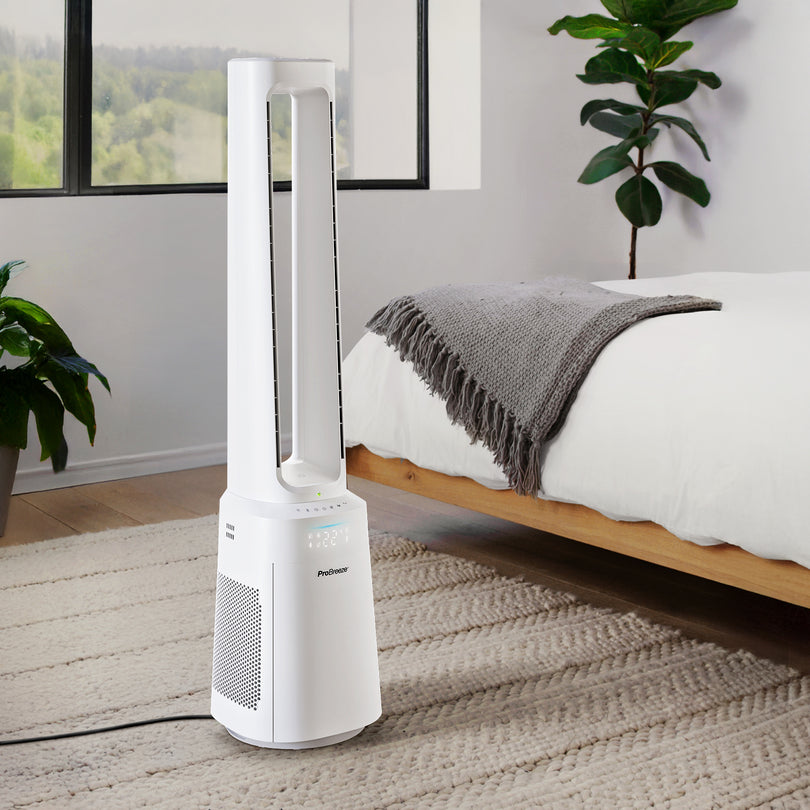
If you would rather not fill the room with another gadget, a fan and purifier combo gives you airflow in summer and cleaner air all year. The 32" Bladeless Tower Fan and Air Purifier and the OmniAir 41" Bladeless Tower Fan and Air Purifier include a HEPA filter (not every bladeless fan does). Read more in our guide to bladeless fans.

AeraDry 25L True 2-in-1 Dehumidifier and Air Purifier with Air Quality Sensor and Smart App Control
4 549,00 kr
View productGetting the best from your air purifier
- Put it in the room you spend most time in, with doors and windows closed so it cleans the same air.
- Give it space. Keep the air intake and outlet clear of curtains and furniture.
- Run it regularly rather than occasionally; clean air is easier to keep than to restore.
- Replace or clean the filters as the manual advises, so it keeps performing as it should.

?Frequently asked questions
What are the benefits of an air purifier?
An air purifier filters dust, pollen, pet dander, smoke and mould spores out of the air in a room, which can mean fewer irritants, less dust on surfaces and a fresher-smelling home. Customers with allergies tell us the bedroom is where they notice it most.
Does an air purifier really remove dust?
Yes. A HEPA filter captures fine dust that passes through it, and a pre-filter catches larger dust and pet hair first. A purifier that is the right size for the room does this continuously, so less dust settles on surfaces.
Does an air purifier remove moisture or help with condensation?
No. An air purifier cleans the air but does not lower humidity. For condensation or damp you need a dehumidifier, or the AeraDry 2-in-1 for both.
Can an air purifier help with allergies and asthma?
It can help reduce airborne triggers such as pollen, dust and pet dander. It is not a medical device and cannot treat asthma or allergies, so keep following your doctor’s advice.
What makes an air purifier quiet in a bedroom?
A low fan speed or a dedicated sleep mode keeps noise down. Follow the instructions in your product’s manual. Pro Breeze fan purifiers cost less than €0.01 an hour to run.
Cleaner, fresher air in every room is closer than you think. See the AeraDry 25L 2-in-1 dehumidifier and air purifier, which cleans the air and removes moisture in one machine, browse our dehumidifier and air purifier range, or start with our 7-step buying guide if you are not sure where to begin.