


The quick answer
- How it reduces smells: A dehumidifier tackles the root cause of musty smells by removing excess moisture from the air, so fabrics dry properly and damp odours cannot linger. See why smells happen.
- Not an air freshener: It doesn’t cover odours with perfume or chemicals—it removes the damp conditions that let musty scents take hold. See how it works.
- Where it helps most: Bedrooms, wardrobes, laundry areas, bathrooms and ground-floor rooms. See simple freshness routines.

There’s a particular kind of smell that’s hard to describe, but you know it when you notice it: a slightly damp, musty, stale scent in a bedroom; a wardrobe that never quite smells fresh; towels that take ages to dry and end up with that lingering “wet” note. Many everyday household smells are directly linked to moisture. A dehumidifier won’t perfume your home, but it addresses the root cause of musty odours: excess humidity. By removing moisture from the air, it helps your home feel lighter, fresher, and noticeably cleaner.
1Why musty smells happen in the first place
Most musty smells aren’t random. They’re a clear signal that moisture is hanging around longer than it should in your home’s air and furnishings.
Moisture builds up when:
- Damp air accumulates: especially in rooms with limited ventilation or cool outer walls.
- Fabrics stay slightly damp: bath towels, indoor drying laundry, bath mats and soft upholstery hold water vapour for hours.
- Hidden corners cannot dry out: behind solid wardrobes, under beds and in enclosed cupboards.
Once moisture is present, it creates the ideal conditions for mildew and damp odours to develop—even in a home that is thoroughly cleaned and vacuumed.
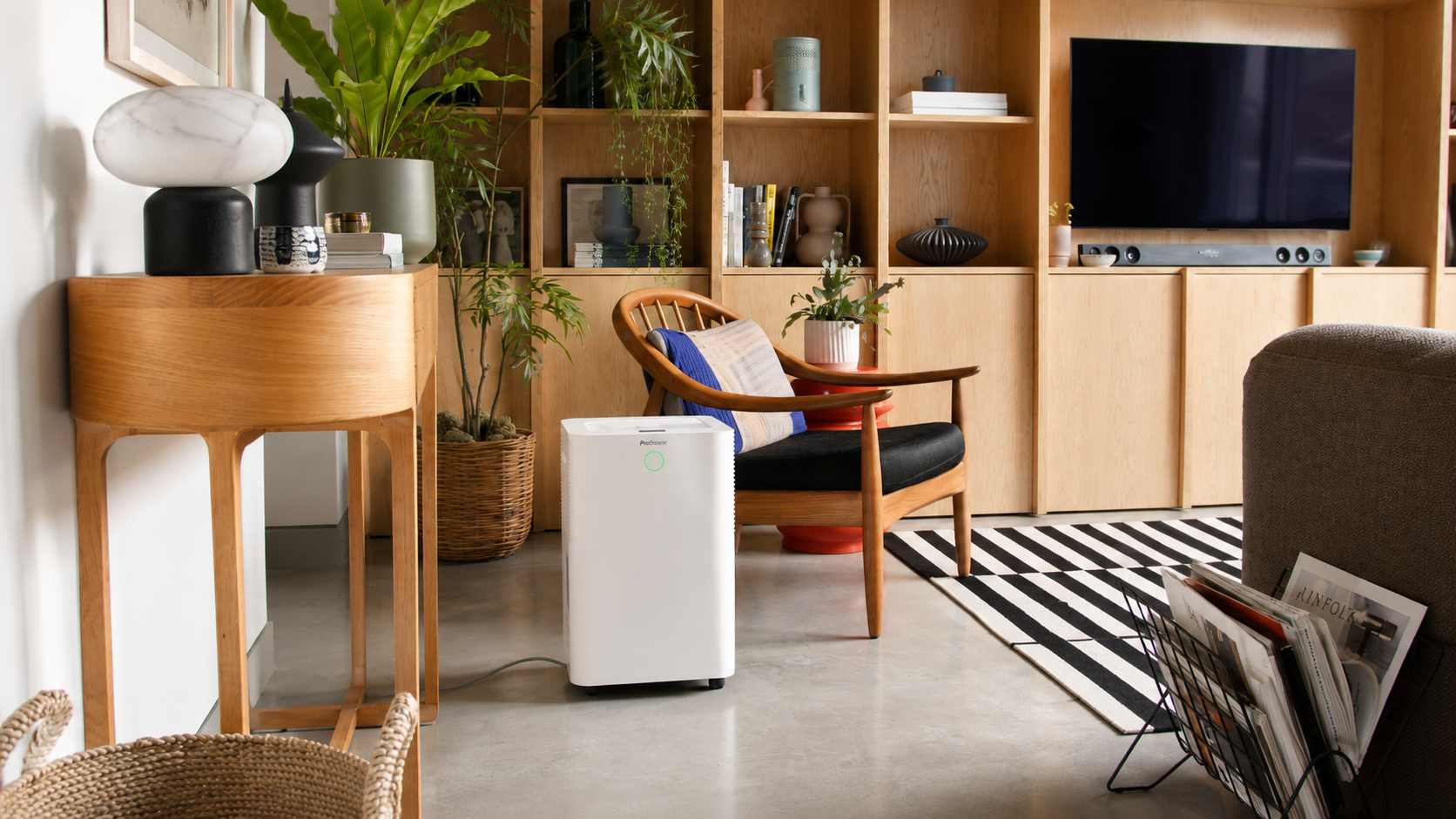
2Common places smells show up (and warning signs)
You don’t need visible black mould for humidity to cause an unpleasant smell. Look for these subtle, everyday signs:
Wardrobes & drawers
Trapped air, packed fabric, and cooler outer walls make wardrobes smell stale, even shortly after washing clothes.
Bedrooms
Overnight breathing and closed windows release up to a litre of moisture, leaving a heavy, stuffy smell by morning.
Bathrooms
Damp air lingers on tiles, shower curtains and bath mats long after showers, spreading damp scents to hallways.
Utility rooms & laundry
Indoor drying racks without active extraction keep moisture trapped in the room, giving washing a sour, wet smell.
Notice the pattern: if a smell worsens after rainy days, during winter, or in rooms that don’t get fresh airflow, excess humidity is almost certainly the culprit.
3How a dehumidifier helps reduce smells (without masking them)
A dehumidifier pulls damp air in, extracts the water vapour through cold coils or an absorbent wheel, and releases warm, drier air back into the room. This stops odours in three distinct ways:
- Helps fabrics dry thoroughly: When towels, washing and soft furnishings dry quickly, bacteria and damp odours cannot take hold.
- Eliminates heavy, stagnant air: Humid air feels thick and carries scents more strongly. Drier air feels crisp, lighter and cleaner.
- Stops repeat offenders: By keeping relative humidity below 55–60%, you remove the damp environment that allows musty smells to return day after day.
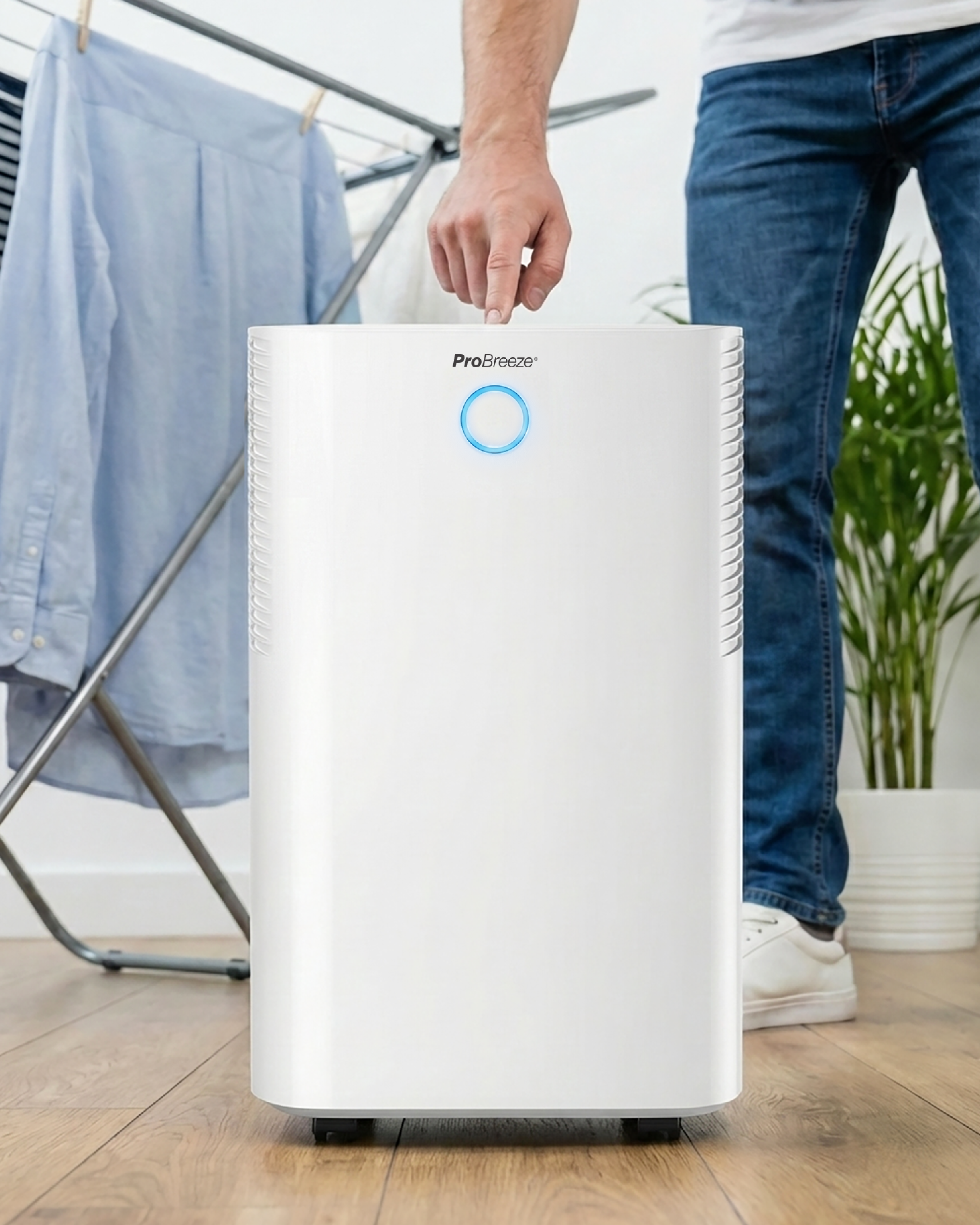
4Simple freshness routines that work
You don’t need an exhaustive routine. Use your dehumidifier strategically for effortless, everyday freshness:
- After showers: Run the dehumidifier in or right outside the bathroom for 30–60 minutes to clear moisture before it settles.
- On laundry days: Place the unit near your clothes airer in a closed room with laundry mode active to dry washing fast and damp-free.
- For musty wardrobes: Run the dehumidifier in the bedroom with wardrobe doors propped slightly open so dry air circulates through clothes.
- Keep windows shut while running: Keeping outside air out ensures the machine dries your home rather than the outdoors.
5Frequently asked questions
Will a dehumidifier remove all smells?
It specifically tackles musty, damp and stale odours caused by trapped moisture. For strong external source smells such as tobacco smoke or cooking grease, regular cleaning and ventilation (or an air purifier with activated carbon) are also recommended, but keeping humidity balanced ensures those scents don’t cling to fabrics.
Is a dehumidifier better than an air freshener?
Yes. Air fresheners merely spray synthetic perfumes that mask odours temporarily while doing nothing about the damp underneath. A dehumidifier tackles the root cause by removing the moisture that breeds musty smells.
Where should I place the dehumidifier?
Place it in the room where the stale scent is most noticeable—typically the bedroom, dressing area, hallway or near the laundry rack. Ensure there is at least 20 cm of clear space around the air vents for optimal circulation.
A dehumidifier removes excess moisture from the air, supporting faster-drying clothes, lighter-feeling rooms, and a home that stays naturally fresh with less effort. Explore our home dehumidifiers to find the right model for your space, or read our guide on how to dry clothes indoors with a dehumidifier.

OmniDry 20L Quiet Dehumidifier with Laundry Mode and Smart App Control
856,00 zł
991,00 zł


AeraDry 25L True 2-in-1 Dehumidifier and Air Purifier with Air Quality Sensor and Smart App Control
1.802,00 zł
View product


