The quick answer
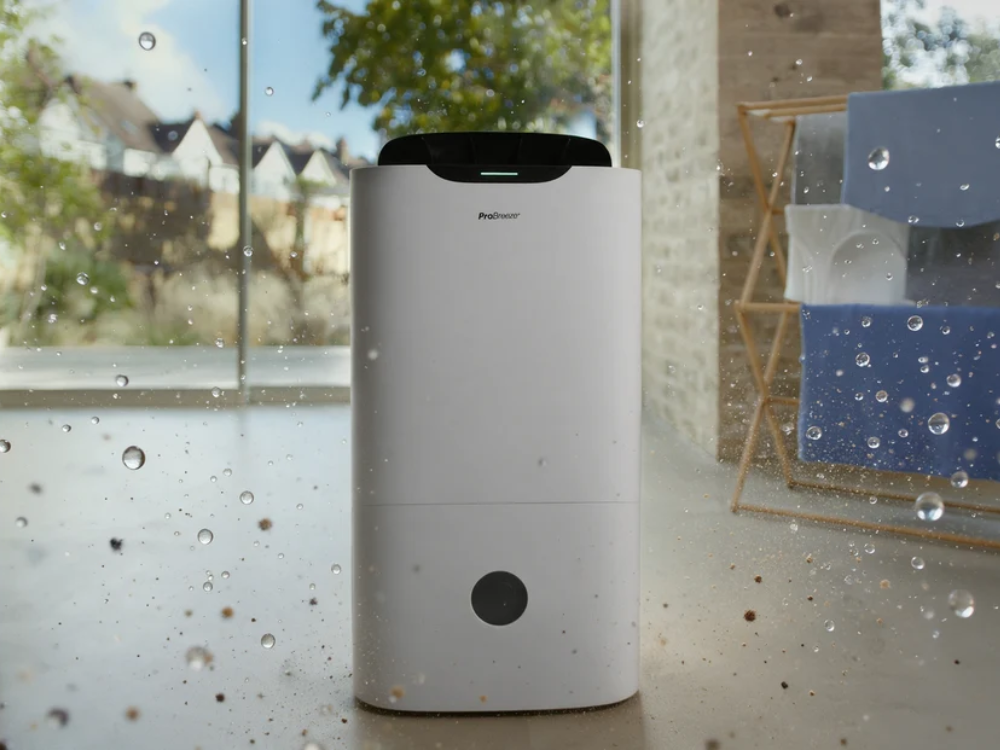
- Does a dehumidifier dry clothes? Yes. It pulls the moisture your washing releases out of the air, so clothes dry faster indoors and the room stays free of damp and musty smells.
- How to do it: shut the door of a small room, space the washing out on an airer, put the dehumidifier beside it and switch on laundry mode. See the 7 steps.
- What it costs: the models below cost €0.22–€0.62 for a four-hour laundry session (just €0.22–€0.37 for the 12L and 20L models), and they dry the room as well as the washing. In comparison, a condenser or vented tumble dryer typically costs around €0.95–€1.00 a load. See the costs.
- Which size: 12 litres for a flat or a couple, 20 litres for most family homes and 40 litres for big households. See which to buy.

Shop laundry mode dehumidifiers
Learning how to dry clothes indoors with a dehumidifier is the easiest way to beat a cold European winter. With no garden washing line for months, most of us end up with a clothes horse in the living room, washing that takes days to dry, steamed-up windows and that damp, musty smell. A dehumidifier turns this around: it takes the water out of the air, so your washing dries faster, smells fresher and doesn’t leave condensation and black mould behind. It costs pennies an hour to run, too. Here’s exactly how to get the best results.
1Does a dehumidifier dry clothes?
Without a dehumidifier, the air around a clothes airer quickly becomes saturated. Once it can’t hold any more water, drying slows to a crawl, and the excess moisture settles on the coldest surfaces in the room: windows, outside walls and the backs of wardrobes. That’s where condensation, mildew and black mould start.
A dehumidifier breaks that cycle. In its own testing, consumer group Which? found that drying a load with a dehumidifier almost halved the drying time compared with the same load left to dry on its own. Many of our customers also tell us the room feels fresher and easier to breathe in, especially those living with asthma or allergies who want to keep damp and mould at bay.
2How to dry clothes with a dehumidifier: 7 steps
- Spin on high. Use your washing machine’s fastest spin. Every drop the drum removes is one less for the dehumidifier.
- Pick a small room and shut the door. A spare bedroom, utility room or bathroom is ideal. The dehumidifier then works on a small volume of air, not the whole house.
- Space the washing out. Hang items with a gap between them so air can move through. Turn thick items such as jeans and hoodies inside out.
- Position the dehumidifier. Stand it next to or in front of the airer, around 30–50 cm away, with the air outlet blowing across the washing. Keep at least 20 cm of clear space around the unit.
- Switch on laundry mode and set the timer. Laundry mode runs the dehumidifier continuously at close to full power, ignoring the usual humidity target, so set the timer (1–24 hours) to roughly how long your load needs.
- Add a fan if you have one. Moving air across the clothes speeds things up even more.
- Empty the tank, or fit the hose. A big load can fill a tank, and the dehumidifier stops when it’s full. Every laundry-mode model supports continuous drainage, so the hose directs collected water to a suitable drain. Follow the instructions in your product’s manual.
Follow your model’s placement and drainage instructions, and keep washing clear of the dehumidifier so it can’t drip onto it.

3How long does a dehumidifier take to dry clothes?
Drying time depends on the load and the room, but the difference is dramatic: Which? found that a dehumidifier almost halved drying time in its comparison. Check thick seams and waistbands before putting clothes away.
Lighter items such as shirts and underwear dry noticeably faster than heavier towels and jeans.
These things make the biggest difference:
- Fabric: towels, denim and thick jumpers take longest; synthetics and cotton shirts dry fastest.
- Spin speed: a higher spin leaves less water to remove.
- Room size: a small, closed room dries washing far faster than an open-plan living space.
- Temperature: compressor dehumidifiers work best in a heated home. For a cold utility room or garage, see our guide to the best dehumidifier for cold rooms and garages.
- Capacity: a 20-litre model removes moisture faster than a 12-litre model in the same room.
4How much does it cost per load?
This is where a dehumidifier really pays its way. The five laundry-friendly models compared below draw just 0.20–0.55 kW. Laundry mode runs close to full power the whole time, so these are realistic figures for a drying session:
| Model | Power | Cost per hour | 4-hour laundry session |
|---|---|---|---|
| OmniDry 12L | 200 W | €0.06 | €0.22 |
| OmniDry 20L | 330 W | €0.09 | €0.37 |
| 20L Premium with Laundry Mode | 270 W | €0.08 | €0.30 |
| 20L Max Extraction with Laundry Mode | 320 W | €0.09 | €0.36 |
| OmniDry 40L | 550 W | €0.15 | €0.62 |
Costs at full power and €0.28 per kWh: the Eurostat EU average electricity price for household consumers (first half 2026, including all taxes). Your tariff may differ. Power figures: each model’s rated power from Pro Breeze product specifications (rating label, at 27°C/60% RH where stated).
Electricity rates vary across Europe. Using the Eurostat EU average of €0.28/kWh (first half 2026, household including taxes), costs in your country may be higher or lower:
| Country | Electricity rate (€/kWh) |
|---|---|
| Ireland | €0.39 |
| Germany | €0.36 |
| Belgium | €0.36 |
| Austria | €0.33 |
| Italy | €0.31 |
| Poland | €0.30 |
| Czechia | €0.29 |
| Spain | €0.25 |
| France | €0.25 |
| Netherlands | €0.24 |
| Portugal | €0.24 |
Because the dehumidifier is also removing damp from the room while it dries your clothes, you get two jobs done for the price of one: drier washing and a drier home. For a full model-by-model breakdown, read how much a dehumidifier costs to run.
5Dehumidifier vs tumble dryer vs heated airer
| Dehumidifier | Tumble dryer | Heated airer | |
|---|---|---|---|
| Running cost | Low about €0.22–€0.62 for a 4-hour session | High about €0.95–€1.00 a load (condenser or vented) | Low to medium |
| Speed | Fast, especially in a small room | Fastest | Moderate |
| Removes damp from the room | Yes | Vented only, via an outside hose | No: moisture goes into the room |
| Kind to clothes | Gentle: no heat or tumbling | Can shrink and wear fabrics | Gentle |
| Useful all year | Yes: condensation, mould, musty smells | Laundry only | Laundry only |
| Space | Compact, on wheels | Large appliance | Folds away |
Tumble dryer costs based on typical energy use (~3.4 kWh per load for condenser and vented dryers) at the Eurostat EU average electricity price of €0.28/kWh.
A tumble dryer is still the quickest option for a big pile of towels. But a dehumidifier costs less per session than a condenser or vented dryer (under half for the 12L and 20L models), is gentler on your clothes and keeps the whole room drier at the same time. A heated airer warms the clothes, but every litre of water still ends up in the room, so pairing one with a dehumidifier gives the best of both.
6What size dehumidifier for drying clothes?
For laundry, size up rather than down: a wet load releases a lot of water in a short time. Use this as a guide. It matches the size guide on our dehumidifiers page.
| Your home | Recommended size | Our pick |
|---|---|---|
| Studio, small flat or one or two people, rooms up to 20 m² | 12 litres | OmniDry 12L |
| Family washing, or laundry plus whole-home damp, rooms up to 30 m² | 20 litres | OmniDry 20L or 20L Laundry Mode models |
| Large households, several loads a week, rooms up to 50 m² | 40 litres | OmniDry 40L or 30L models |
Litres refer to maximum moisture removal per day; room sizes from Pro Breeze product specifications.
Still unsure? Our 13-step guide to choosing a dehumidifier walks through room size, type and features.
7Best Pro Breeze dehumidifiers for drying clothes

OmniDry 20L Quiet Dehumidifier with Laundry Mode and Smart App Control
4.733,00 Kč
5.481,00 Kč


OmniDry 40L Quiet Low Energy Dehumidifier with Laundry Mode and Smart App Control
5.481,00 Kč
6.726,00 Kč
Want maximum moisture removal on a budget? The 20L Dehumidifier with Max Extraction and Laundry Mode has a 5.5 L tank and a dedicated laundry setting. Compare every model in our laundry mode dehumidifiers range.
8Mistakes that cause damp washing smells
- Leaving washing in the drum: hang it out straight away. Damp clothes left bunched up start to smell within hours.
- Overcrowding the airer: clothes touching each other trap moisture and dry unevenly.
- Drying in a big open room: the dehumidifier ends up drying the whole house instead of your clothes.
- Leaving the door open: damp air drifts into other rooms and settles on cold windows.
- Forgetting the tank: once it’s full, the dehumidifier stops. Empty it before a big load or use the drainage hose.
Drying clothes indoors is one of the biggest causes of winter condensation. If you’re already seeing wet windows or black spots, read our guide to using a dehumidifier for condensation and mould.
9Frequently asked questions
What helps a dehumidifier dry a large load of laundry?
Laundry mode removes moisture from the air as clothes dry. Our quietest OmniDry models run at around 36 dB. A larger tank needs emptying less often, and a drainage hose can send water straight to a suitable drain. Follow the instructions in your product’s manual.
Does a dehumidifier work for drying clothes in a cold room?
Compressor dehumidifiers work best in a heated home, and our models are rated from 5°C. In a cold utility room, garage or conservatory, a desiccant dehumidifier keeps working at lower temperatures. Our 10L Desiccant is rated from 1°C.
Will drying washing indoors cause mould?
It can without help: in Which?’s test, a dehumidifier pulled around two litres of water out of the air from a single load. Running a dehumidifier while your washing dries removes that moisture, which helps prevent condensation and stops mould from taking hold.
Do I need a dehumidifier with laundry mode?
It makes a real difference. Laundry mode keeps the dehumidifier running at close to full power, instead of pausing when the room reaches its target humidity. It runs until you switch it off, the timer ends or the tank fills, so set the timer for the drying time you need.
How far should the dehumidifier be from the clothes?
Close, but not touching: around 30–50 cm from the airer, with the air outlet pointing across the washing and about 20 cm of free space around the unit so air can flow in and out.
A dehumidifier is the simplest way to dry clothes indoors quickly, cheaply and without the damp. Explore our laundry mode dehumidifiers to find the right size for your home, and for more help choosing, see our guide to moisture absorbers vs dehumidifiers.