The quick answer
- Desk & clip fans: compact, targeted cooling for desks, workstations and bedside tables. See desk fans.
- Tower fans: slim, space-saving cooling with wide oscillation for bedrooms and living rooms. See tower fans.
- Pedestal fans: elevated, high-velocity airflow for medium to large open-plan spaces. See pedestal fans.
- Bladeless fans: modern design with no exposed blades, making them safer around children and pets. See bladeless fans.
- Smart fans: Wi-Fi app and voice control for custom schedules and connected home comfort. See smart fans.

Choosing a fan sounds simple — until you are faced with different shapes, sizes, and features. Desk fan, tower fan, pedestal fan, bladeless fan, smart fan: what actually matters? The easiest way to choose is to start with one straightforward question: Where will you use it, and what do you want it to do?
1Start with the room
The layout and size of your room dictate the type of airflow you need:
- Desk or bedside table: choose a compact, direct-airflow fan that delivers focused cooling without blowing paperwork around or crowding your surface.
- Bedroom or living room: look for whisper-quiet operation, a slim footprint, gentle oscillation and an auto-off timer.
- Large living areas: choose a model designed for wider circulation and higher elevation to move air smoothly across the entire room.
2Desk and clip fans: close-up personal cooling
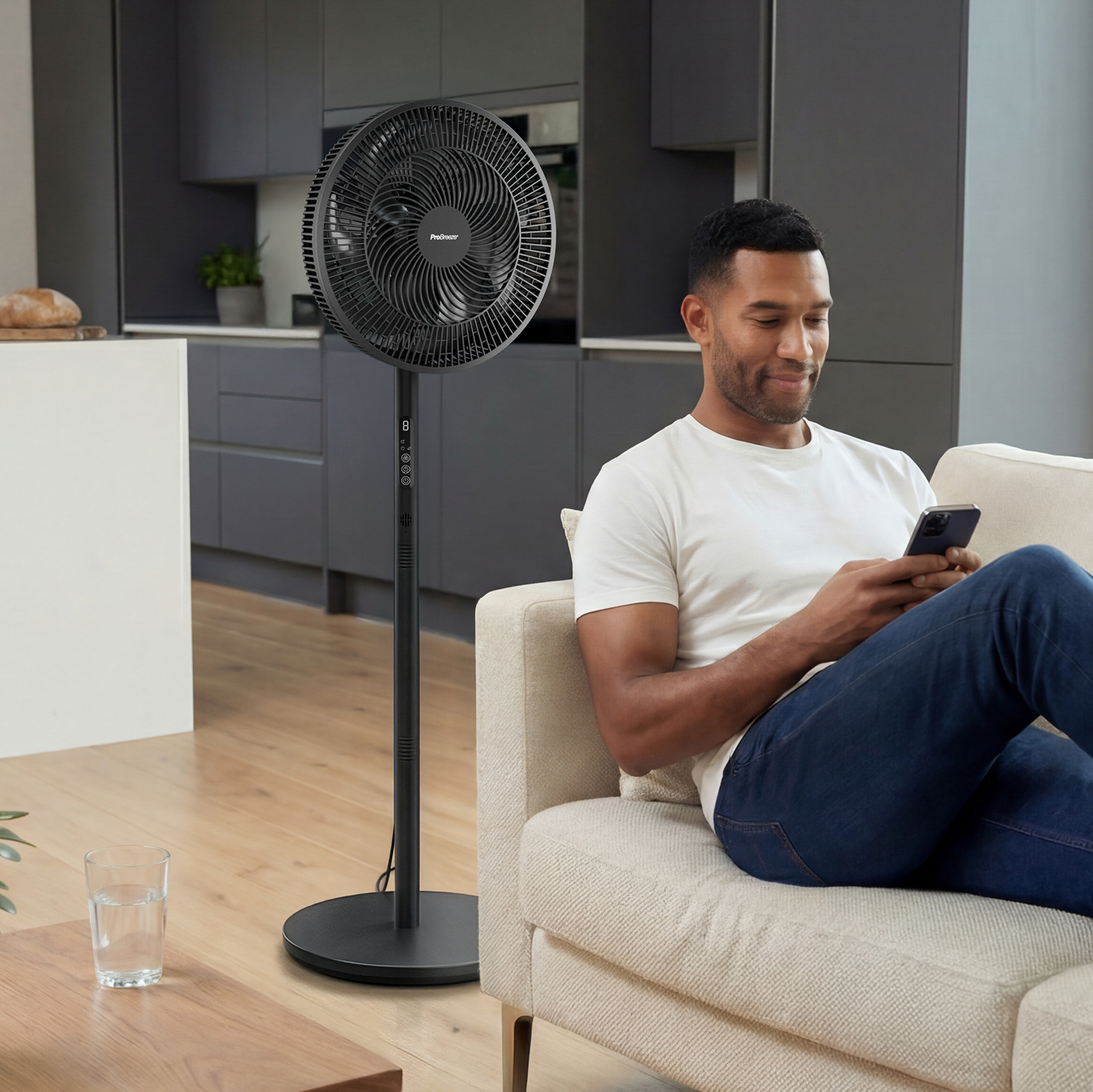
Close-up airflow for workspaces, home offices and bedside use.
Desk and clip-on fans are designed for personal cooling at close range. They fit comfortably on a workstation, bedside table, kitchen counter or shelf without taking up valuable room.
The 6" Mini Clip Fan features a sturdy clamp that attaches securely to desk edges, bedframes or gym equipment, while the AirFlo™ Mini Turbo Fan delivers a remarkably powerful concentrated air stream for warm office days.
3Tower fans: slim and space-saving
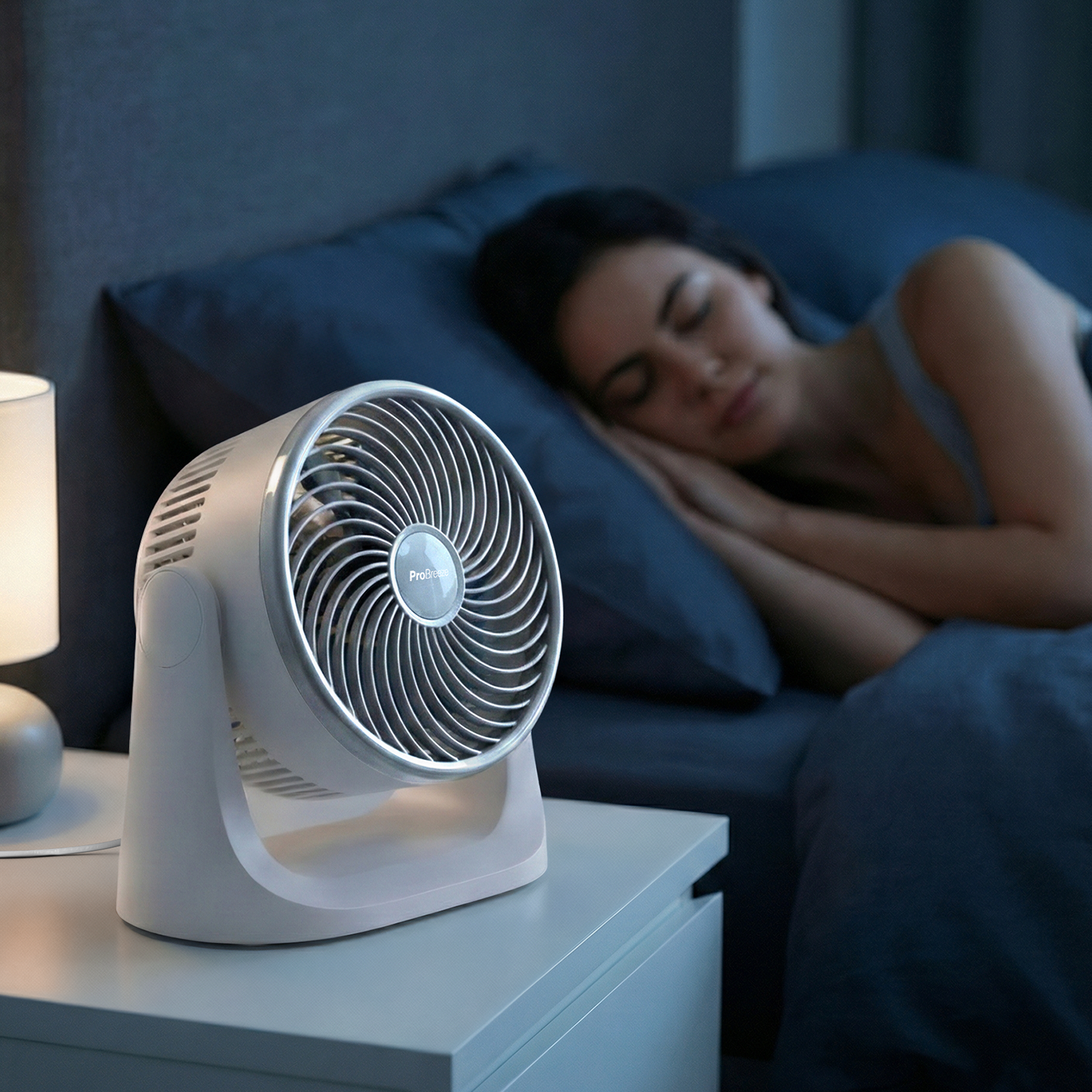
Slim, tidy cooling for bedrooms, living rooms and tight corners.
Tower fans are vertical cooling units that distribute airflow evenly through a tall internal column. Their slender profile fits effortlessly into room corners and narrow spaces where a round pedestal fan might feel intrusive.
Equipped with wide-angle oscillation, multiple breeze modes (normal, natural, sleep) and programmable timers up to 15 hours, models like our 30" Oscillating Tower Fan provide gentle, room-filling circulation while operating quietly in the background.
4Pedestal fans: high airflow for larger spaces
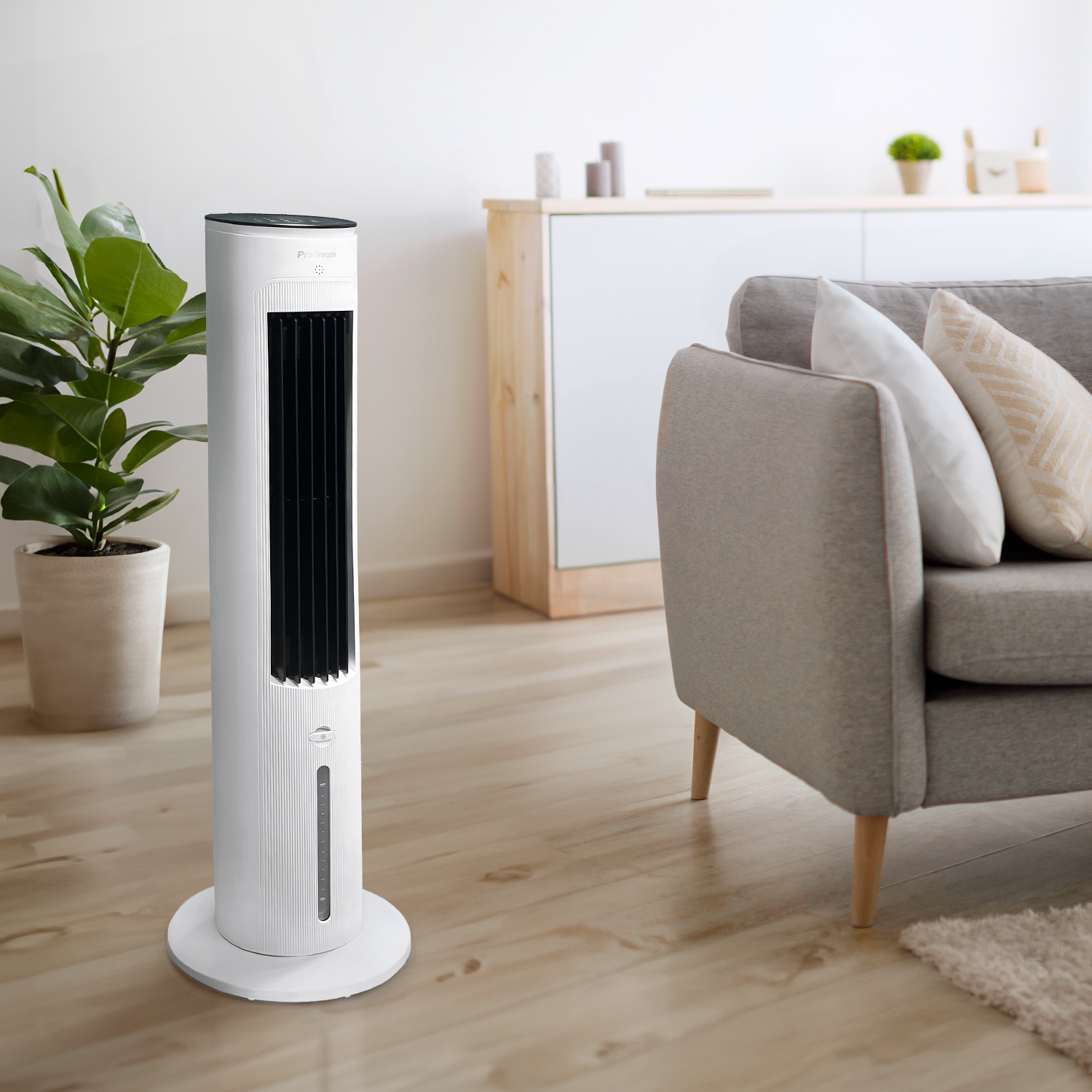
Stronger airflow and broader coverage across open-plan areas.
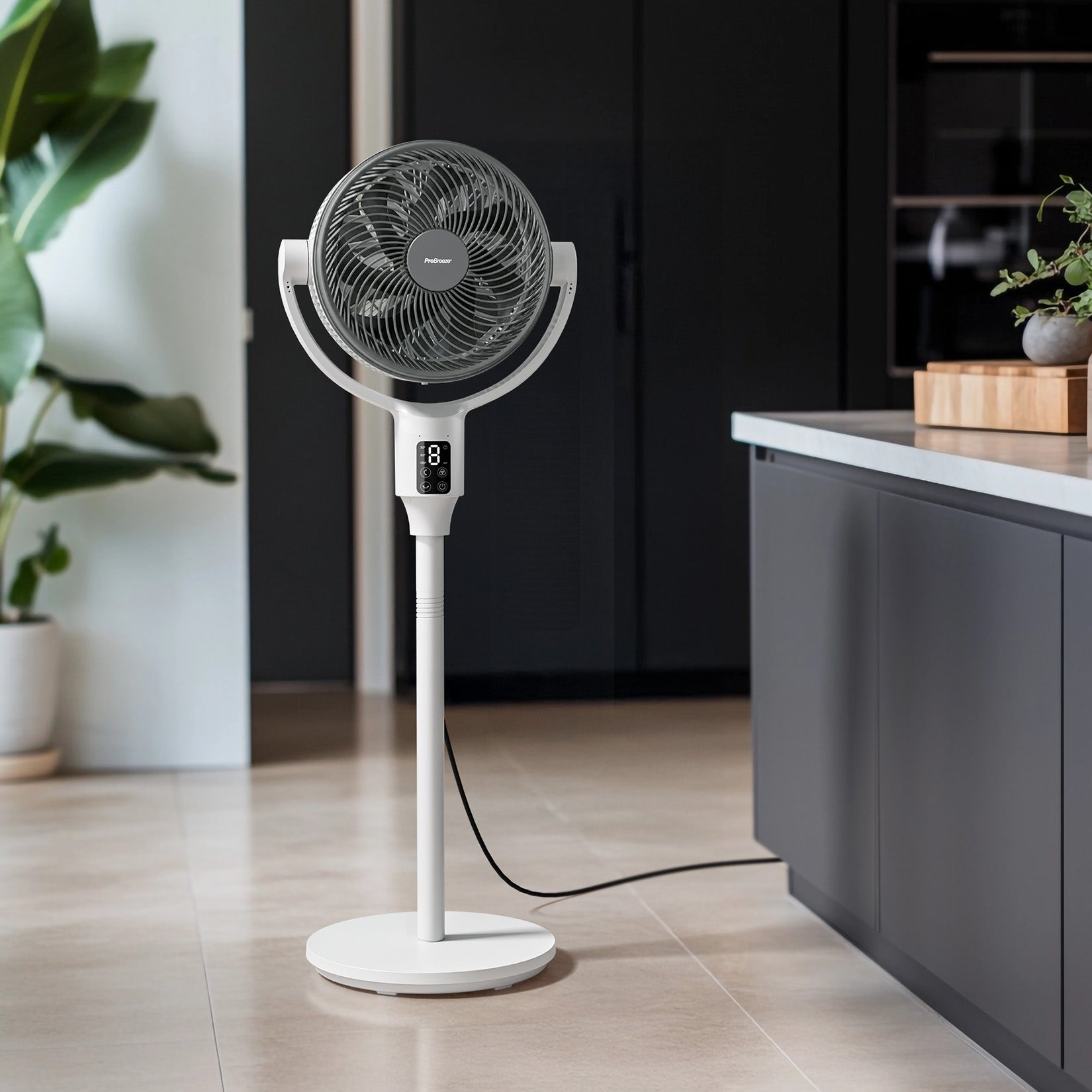
Pedestal fans sit on an adjustable pole with a tilting head, allowing you to direct powerful air currents higher into the room—ideal for cooling over the top of beds, dining tables or sofas.
Our flagship AirFlo Plus™ 44" Hybrid Pedestal Fan pairs energy-efficient DC motor technology with aerodynamic blades to produce superior air circulation at an ultra-quiet 50 dB.
5Bladeless fans: sleek, modern and child-safe
Clean architectural design, smooth continuous breeze and superior safety.
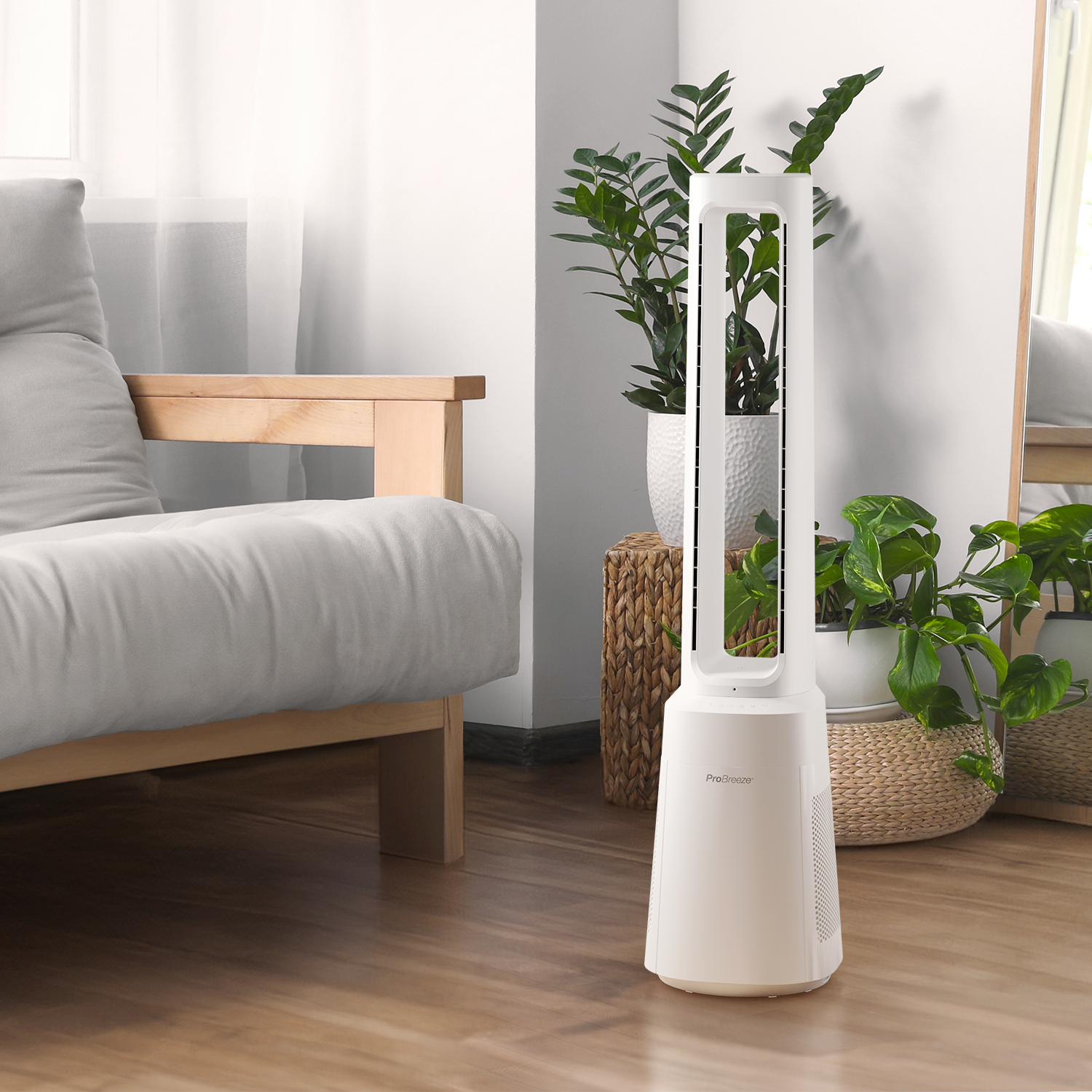
Bladeless fans draw air in through their base and project a smooth, steady stream through an aerodynamic loop. Without fast-spinning external blades or grilles that trap dust, they are exceptionally easy to wipe clean and completely safe around curious little fingers and pets.
Models such as the 40" Bladeless Tower Fan and the 32" Bladeless Fan with integrated HEPA air purifier combine premium styling with multi-stage air purification.
6Smart app fans: connected convenience
Full smartphone control, smart schedules and hands-free voice automation.
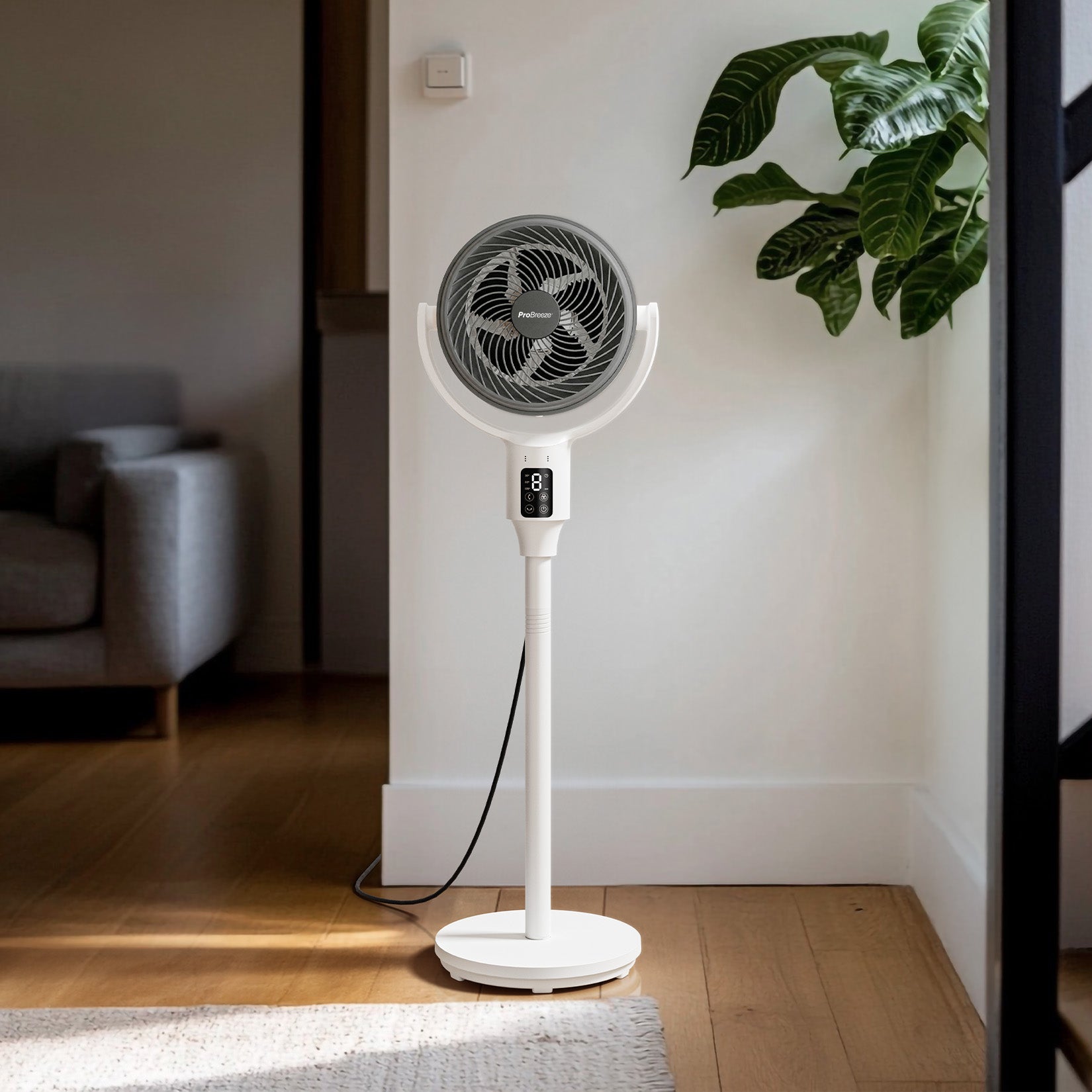
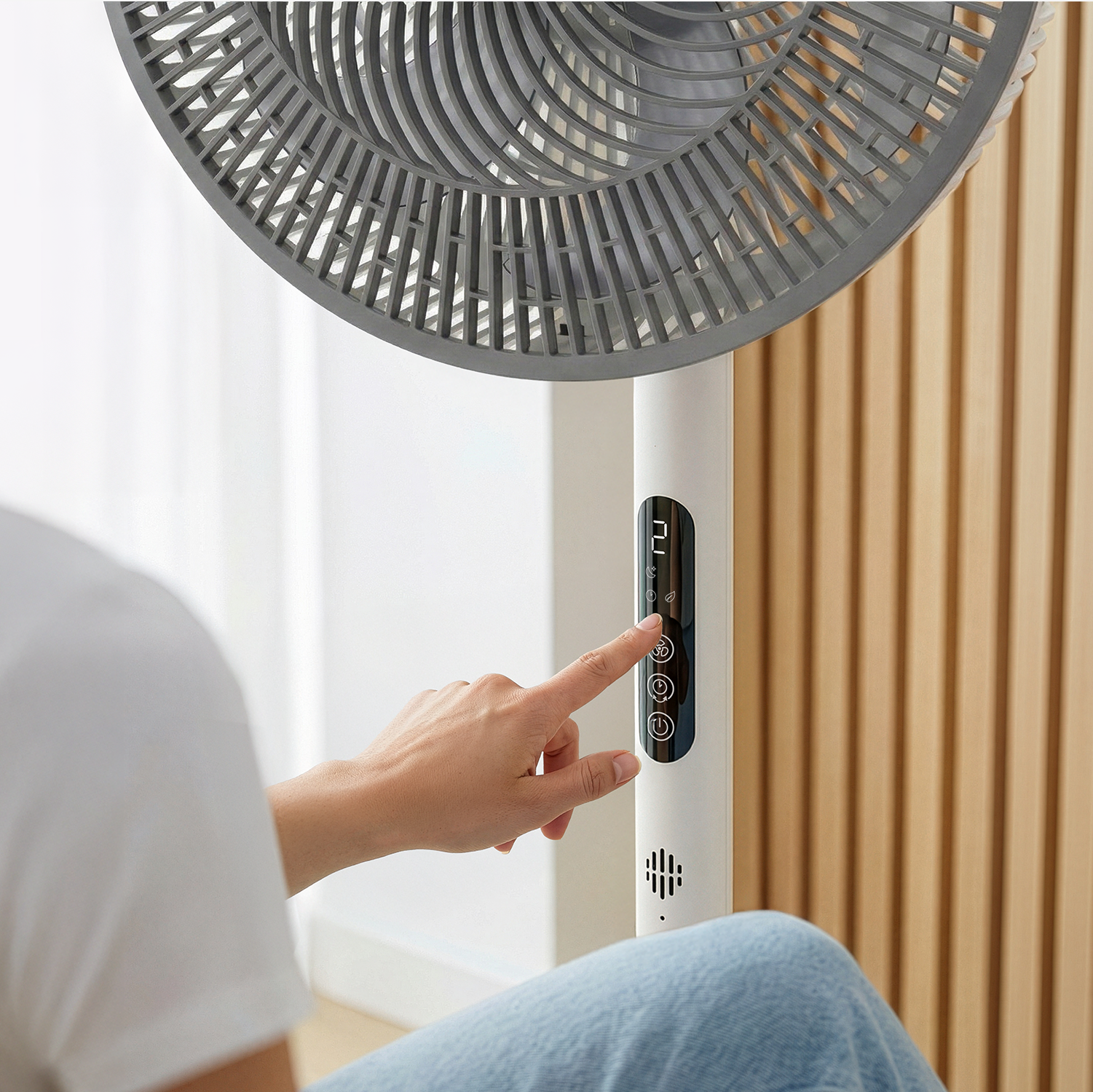
Smart fans let you adjust speed, oscillation and timers directly from your smartphone via the Pro Breeze app, or using voice commands with Amazon Alexa and Google Home.
Smart scheduling lets you choose when the fan switches on or off, and app control lets you change settings from the sofa.
7Key features to look for
When selecting your fan, look for features that enhance your daily experience:
- Noise level (dB): for bedrooms or study spaces, look for models running under 50 dB or featuring dedicated low-noise sleep modes.
- Oscillation: wide-angle horizontal oscillation (60° to 90°) spreads refreshing air across the entire room instead of blasting one static spot.
- Programmable timers: auto-off timers (up to 15 hours) switch the fan off after the selected interval to limit energy use.
- Running costs: electric fans are exceptionally cheap to run, typically drawing only 30W to 55W (under €0.01 to €0.02 an hour at the EU average rate of €0.28/kWh).
8The quick pick: matching fan type to your space
Not sure where to begin? Use this handy summary to match the fan type to your living space:
| Fan type | Best for | Key strength | Our top pick |
|---|---|---|---|
| Desk & clip fan | Workspaces, bedside tables, desks | Compact, directional breeze | 6" Mini Clip Fan |
| Tower fan | Bedrooms, lounges, small spaces | Slim profile & quiet oscillation | 30" Oscillating Tower Fan |
| Pedestal fan | Large living rooms, high beds | Elevated, powerful airflow | AirFlo Plus™ 44" Pedestal Fan |
| Bladeless fan | Family homes with kids or pets | Child-safe, easy clean & sleek | 40" Bladeless Tower Fan |
| Smart fan | Connected homes & automation | App scheduling & voice control | 40" Smart Bladeless Fan |
9Frequently asked questions
Which type of fan is quietest for sleeping?
Tower fans and bladeless fans are generally the quietest options for bedrooms. Models like the AirFlo Plus™ and Pro Breeze bladeless fans run at whisper-quiet sound levels (50 dB or lower) on their low or sleep settings, with a gentle airflow that suits quiet bedrooms.
Are bladeless fans actually safer?
Yes. Because the fast-spinning impeller is safely sealed inside the enclosed base, there are no accessible spinning blades or pinch points. This makes them ideal for homes with toddlers, young children or pets.
How much does it cost to run an electric fan overnight?
Very little. With power consumption typically between 30W and 50W, running a fan for an 8-hour night costs between €0.07 and €0.11 at the EU average electricity price of €0.28 per kWh.
What is the difference between a tower fan and a pedestal fan?
A tower fan houses a vertical cylinder impeller inside a compact rectangular column, delivering floor-to-waist height air circulation with a minimal footprint. A pedestal fan features an elevated, oscillating round fan head on an adjustable pole, which can throw higher-velocity air over furniture and across larger open spaces.
You do not need the most expensive fan on paper — you need the right fan for your room. Explore our full range of electric fans and discover reliable, quiet air comfort tailored for your home.