

Whether you own a house or you’re renting, damp is an inconvenient annoyance to all. Damp can cause damage to property and possessions as well as bring around negative health impacts, so if you do have damp or want to be prepared in the future, we’ve got you.
We’re here to save you endless hours of searching for “How to get rid of damp?” or “What causes the smell of damp?” and give you the tools to recognise, treat and most importantly of all, prevent damp.
How to know if you have damp
If you suspect you have damp – you probably already do! To figure out if you have damp, you must be able to recognise the tell-tale signs:
- Walls – Hold your hand against the wall. Does it feel very cold or slightly wet? Look for signs of mould or fungal growth which will appear as black speckled marks or grey growths on painted walls, woodwork, grouting, and wallpaper. Flaking paint or curling wallpaper can also be a sign.
- Ceilings – As well as looking for signs of mould, pay close attention to the colour of the ceiling. Is it discoloured or stained in areas? Brown patches in the external corners and near chimney breasts can be damp.
- Windows – Condensation on windows in the morning, along with small puddles of water along windowsills, can indicate high moisture levels within your house. This can be both a cause and a symptom of damp. Black mould may also develop on wooden and PVC window frames, and on the silicone sealant used around the edge of frames.

What causes damp?
Damp is not one problem; it is three, and each needs a different fix. Working out which one you have is the most important step, because treating the wrong one wastes time and money.
Condensation damp
This is the most common type in homes across Europe. Warm, moisture-filled air from cooking, showers, drying clothes indoors and even breathing overnight hits a cold surface such as a window, an external wall or a corner behind furniture, and turns back into water. It is worst in winter, and it is the usual cause of black mould around window frames and on bedroom walls. The cure is to cut the moisture in the air and keep the home evenly heated and ventilated.
Penetrating damp
This is water getting in from outside through a fault: a leaking roof, broken or blocked gutters and downpipes, cracked render, failed pointing or a leaking pipe. It tends to show as a patch that grows, often getting worse after rain. A dehumidifier will not fix it; the leak has to be repaired at the source.
Rising damp
This is ground water travelling up through a wall when the damp-proof course is missing or has failed. It typically shows as a tide mark low down on a ground-floor wall, with crumbling plaster and lifting paint. It is less common than many people think, so get a proper survey before paying for expensive treatment.
How to treat damp
- Find the cause. Use the hand test above, or a damp meter, and look outside for blocked gutters, cracked render or leaks. Fix any leak first.
- Clean visible mould safely. Wear gloves and a mask, ventilate the room and use a proper mould cleaner rather than dry brushing, which spreads spores into the air. If the mould covers a large area or keeps coming back, speak to a professional.
- Lower the moisture in the air. This is the step that stops condensation damp and mould coming straight back. Open windows or use extractor fans when cooking and showering, and run a dehumidifier in the worst room.
- Let the wall dry before you redecorate. Painting over a damp patch without fixing the cause usually fails; the stain and peeling return.
If you rent, tell your landlord about any damp you suspect is caused by a leak or a building fault, and keep a record of photos and dates.
How to prevent damp
- Ventilate after showers and cooking: use extractor fans, or open a window slightly for a while.
- Put lids on pans, and dry clothes outside or in a ventilated room when you can.
- Heat the home steadily rather than in short bursts, so surfaces do not stay cold.
- Leave a small gap between furniture and external walls so air can circulate.
- Wipe condensation off windows in the morning, and keep gutters and downpipes clear.
- Measure it. A digital hygrometer costs under €15 and shows the humidity in a room. Aim for 30–50% in summer and 30–40% in winter; black mould starts to grow at around 50% humidity.
Where a dehumidifier fits in
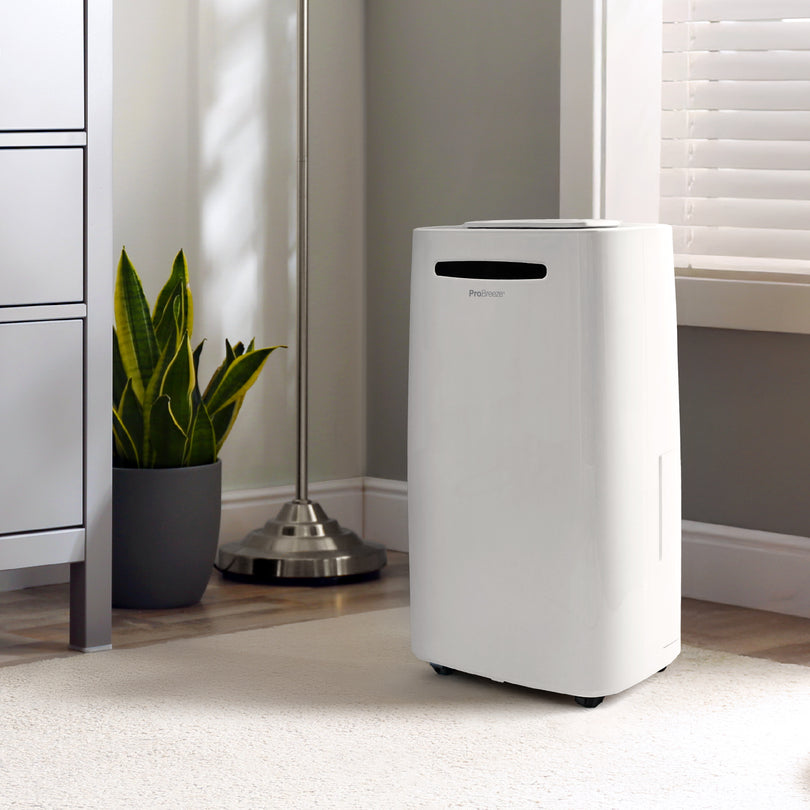
A dehumidifier does not repair a leaking roof, but for the most common cause of damp, everyday moisture in the air, it is the most effective habit you can add. It pulls excess water vapour out of the room and collects it in a tank, so there is less moisture to settle on cold surfaces and feed mould. Most homes do well with a compressor model, such as the OmniDry 12L, kept in the room that is worst affected; browse the full dehumidifier range to compare sizes.
To go deeper, read our guide to using a dehumidifier for condensation and mould, with the right humidity level and where to put it in every room. If you are choosing one, our 13-step guide to buying a dehumidifier covers size, type, running costs and features. Wondering whether a cheaper moisture trap is enough? See moisture absorbers vs dehumidifiers.
Quick answers
Does damp go away on its own?
Rarely. If the cause is a leak or a building fault it will keep getting worse, and if it is condensation it returns every winter until the moisture in the air is brought under control.
Is damp bad for your health?
Damp and mould can make a home feel unpleasant and can aggravate allergies and asthma, which is why it is worth tackling early rather than ignoring it.
What is the quickest way to reduce damp in a room?
Fix any leak, wipe away condensation, ventilate, and run a dehumidifier so the air stays at a comfortable humidity.