The quick answer
- The 3 main types: Compressor (refrigerant) models for everyday rooms, desiccant models for cooler unheated spaces, and thermoelectric (Peltier) mini units for small enclosed areas like wardrobes.
- Compressor dehumidifiers: Best for heated homes, bedrooms and laundry drying; highly energy-efficient in normal room temperatures. How they work.
- Desiccant dehumidifiers: Best for colder spaces (down to 1°C) like garages, basements and winter conservatories. How they work.
- Mini dehumidifiers: Whisper-quiet Peltier units for cupboards and small ensuites. How they work.
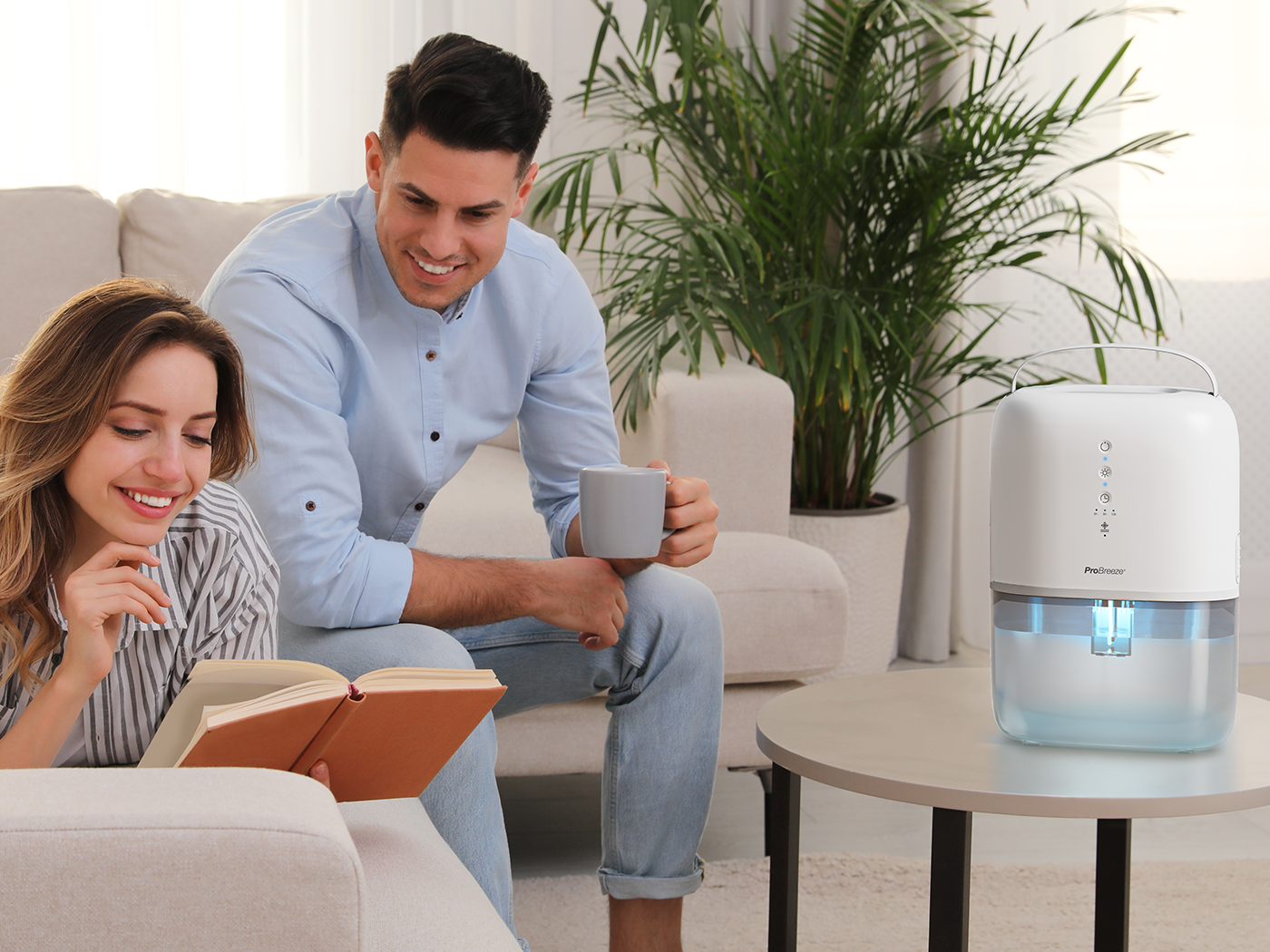
If you’ve started looking for a dehumidifier, you’ll notice something quickly: not every dehumidifier is built the same. Some are designed for everyday rooms, some work brilliantly in cooler spaces, and some are small ‘mini’ units made for cupboards or tight areas. Once you understand the basics, choosing the right type becomes simple. Here is how each type works, where it performs best, and how to pick the right one for your home.
1The quick answer: the 3 main types
Most home dehumidifiers fall into three categories:
- Compressor (refrigerant) dehumidifiers: the most common type for typical indoor temperatures.
- Desiccant dehumidifiers: outstanding performers in cooler rooms and unheated spaces.
- Thermoelectric (Peltier) / mini dehumidifiers: compact, whisper-quiet units for very small spaces like wardrobes and cupboards.
There are also whole-house ducted systems, but for most households, one of the three portable types above is the simplest and most flexible place to start.
2What all dehumidifiers have in common
Whatever the type, the basic idea is the same: air goes in, water comes out.
A fan pulls humid air into the unit. The dehumidifier removes water vapour, and that water collects in a tank (or runs out through continuous drainage). Drier air is then released back into the room.
Many dehumidifiers also use a built-in humidistat (a humidity sensor) to maintain a comfortable level automatically—so it acts as a quiet helper in the background, rather than another job to manage.
3Type 1: Compressor (refrigerant) dehumidifiers
Compressor dehumidifiers remove moisture by cooling the air.
- A fan pulls humid room air in.
- The air passes over refrigerated cold coils inside the unit.
- Moisture condenses into water droplets (just like condensation on a cold glass).
- The water drips into the collection tank (or continuous drain).
- The air is gently rewarmed and released back into the room.
This design is why compressor dehumidifiers are so popular: they are extremely energy-efficient at typical indoor temperatures (above 15°C) and can remove large volumes of water per day.
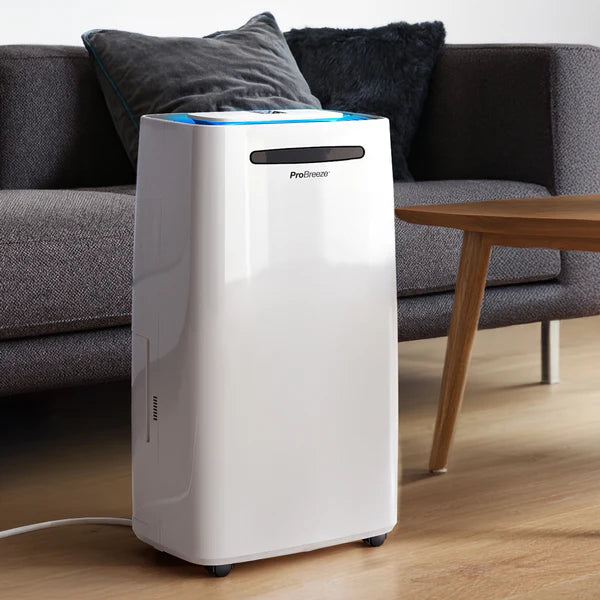
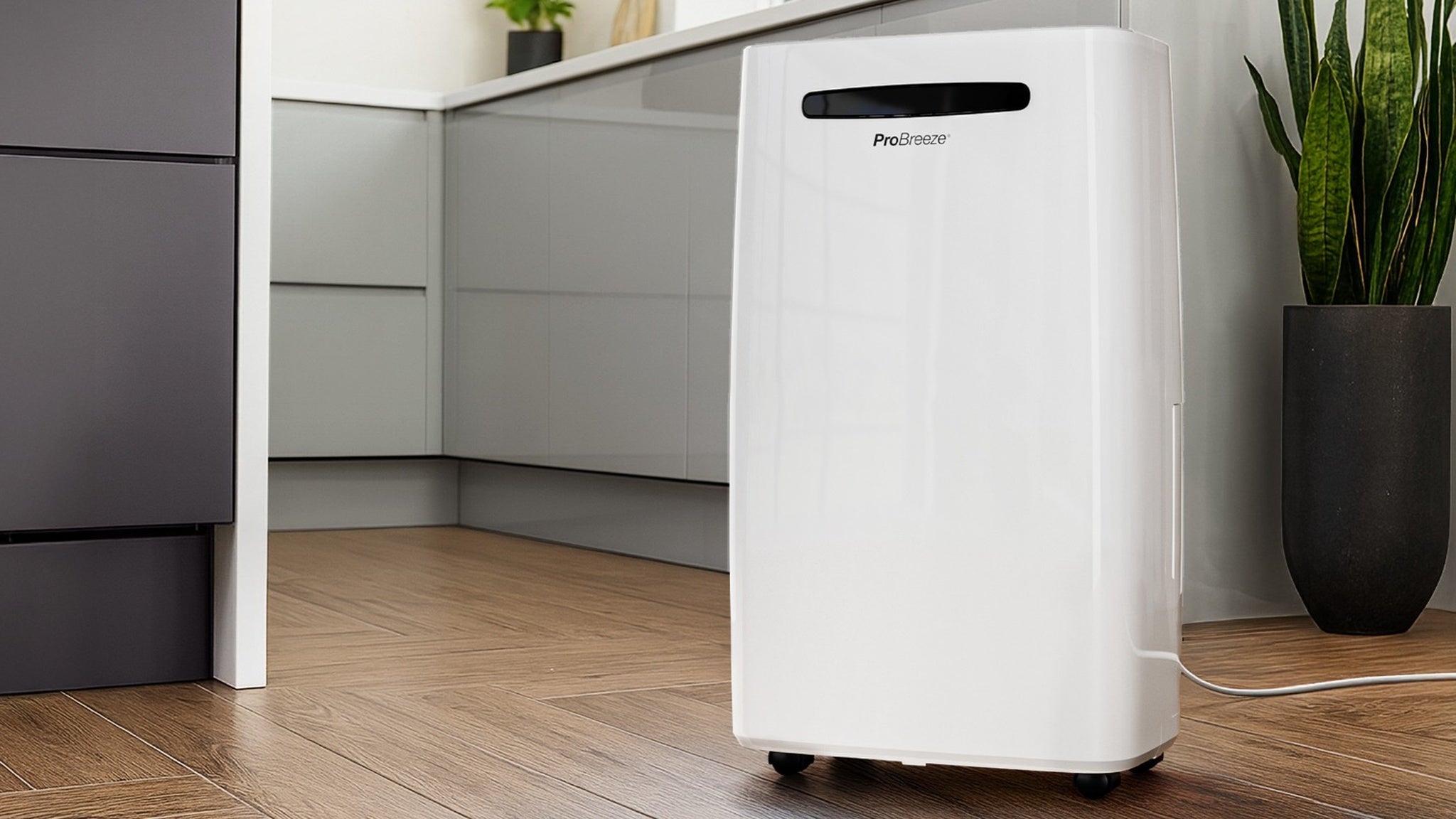
Best for: everyday rooms and general humidity control
A compressor dehumidifier is usually the best all-round choice for:
- Bedrooms and living rooms
- Kitchens and hallways
- Utility rooms and indoor laundry drying
- Homes dealing with window condensation, damp corners, or stuffy air
If the space you want to treat is consistently cold (below 10–15°C, such as an unheated garage or winter conservatory), a desiccant model is often the better choice.
4Type 2: Desiccant dehumidifiers
Desiccant dehumidifiers remove moisture by absorbing it directly from the air.
Instead of cold coils, they use a moisture-absorbing desiccant material arranged in a slowly rotating wheel. As humid air passes through, the material traps water vapour. An internal heater then warms a secondary airflow to dry the wheel, condensing the moisture into the collection tank.
Because this process does not rely on cold condensation surfaces, desiccant dehumidifiers keep working effectively down to 1°C. They also release gently warmed air, which can take the chill off a cold room.
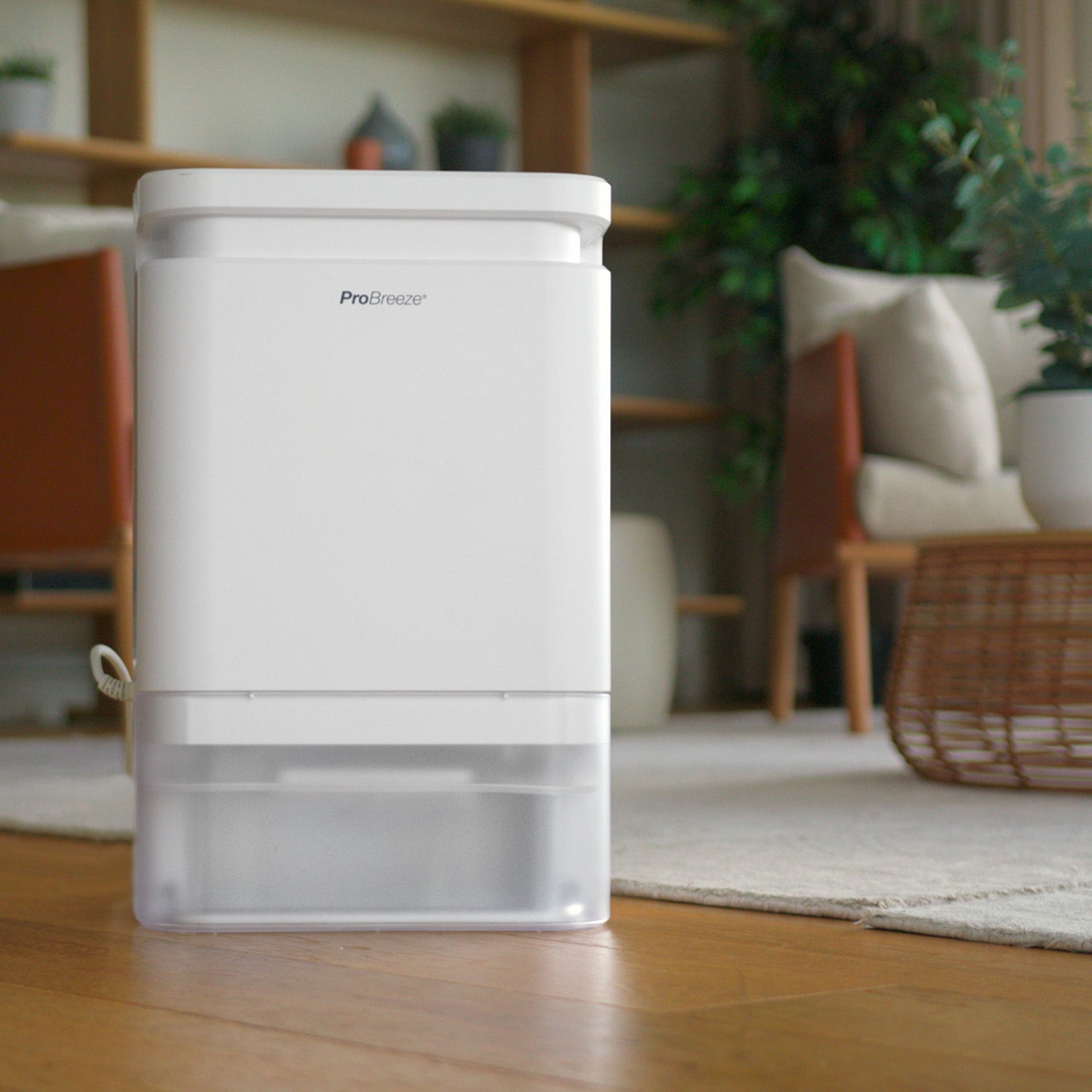
Best for: cooler rooms and quicker spot-drying
A desiccant dehumidifier is an ideal fit for:
- Cooler spaces (unheated garages, basements, workshops)
- Homes that feel cold and damp in winter
- Bedrooms where you appreciate gentle background warmth alongside dry air
- Laundry drying in cool, unheated rooms
5Type 3: Thermoelectric (Peltier) & mini dehumidifiers
Mini dehumidifiers use thermoelectric technology (the Peltier effect). Instead of a compressor or desiccant rotor, they use a small electric plate that creates a cold side and a warm side. As moisture in the air contacts the cold plate, it condenses and drips into a compact water tank.
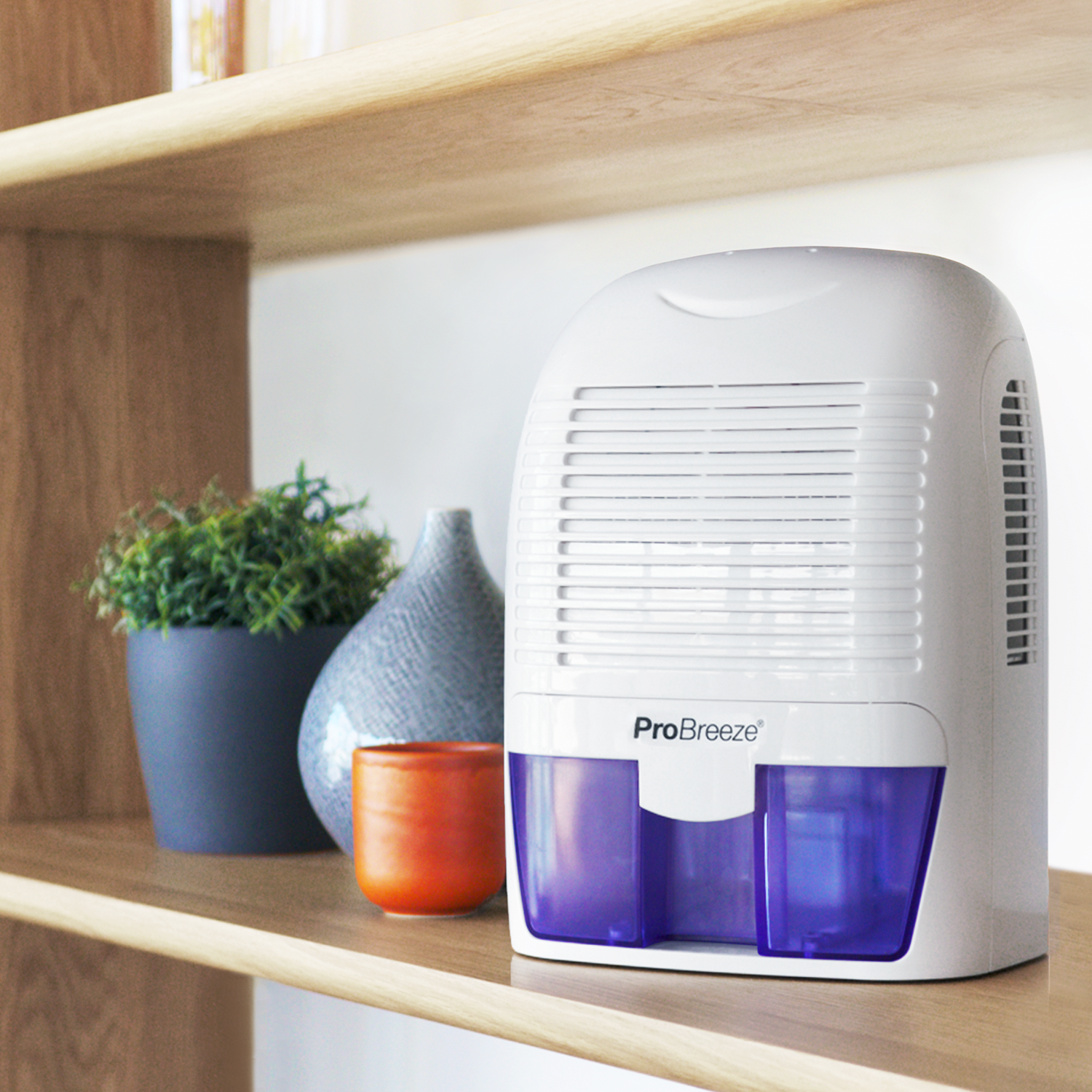
Best for: wardrobes, cupboards and small enclosed spaces
Thermoelectric units are:
- Extremely compact, lightweight and whisper-quiet (no compressor hum)
- Low energy consumption
- Designed for enclosed spaces up to 5–15 m² rather than whole rooms
While a mini unit cannot tackle severe whole-room damp or dry large laundry loads, it is an affordable, neat helper for wardrobes, caravans, desks or small ensuites.
6What about whole-house dehumidifiers?
Whole-house dehumidifiers are ducted systems integrated into a home’s central HVAC or ventilation system. While they treat large spaces uniformly without occupying floor area, they require ductwork, professional installation, and a significantly higher upfront investment (€900–€3,000+).
For most households, a portable dehumidifier offers far greater flexibility: you can place it exactly where humidity builds up, move it as routines change, and achieve excellent moisture control at a fraction of the cost.
7How to choose the right type: a simple decision guide
Start with two questions: what space are you treating, and what is the typical room temperature?
- Typical indoor room temperature (15–25°C): Choose a compressor dehumidifier.
- Cooler or unheated spaces (below 15°C): Choose a desiccant dehumidifier.
- Small enclosed spaces (wardrobes, pantries, small cupboards): A mini thermoelectric unit is ideal.
Then check these practical features:
- Room size / coverage: Match the unit’s rated area to your room dimensions.
- Extraction rate: Daily litres extracted (larger damp problems need 20L–30L capacity).
- Noise level: Prioritise quiet models (under 40 dB) for bedrooms and home offices.
- Continuous drainage: Allows hose connection for hands-free operation in basements and utility rooms.
- Smart features: Digital humidistats, laundry modes, and timers save energy and effort.
83 tips to use any dehumidifier well
- Put it where the moisture is: Place it near clothes airers, in condensation-prone rooms, or damp areas.
- Close external windows: Keep doors and windows shut while running so you dehumidify the room, not the outdoors.
- Give it breathing room: Keep at least 20 cm of clear space around the air inlet and outlet for free airflow.
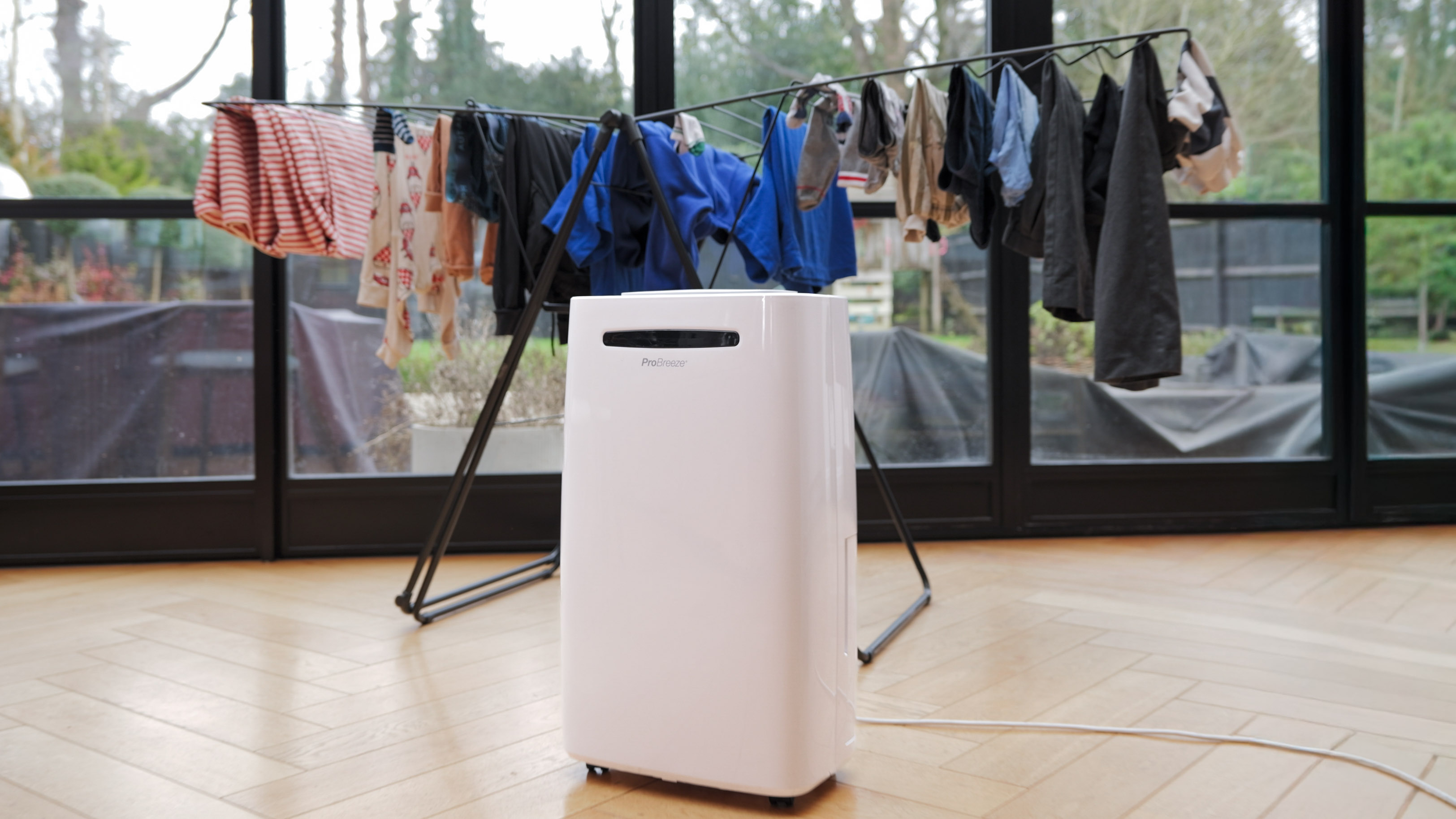

OmniDry 20L Quiet Dehumidifier with Laundry Mode and Smart App Control
856,00 zł
991,00 zł

9Frequently asked questions
Which type works best in a cold room?
Desiccant dehumidifiers are the top choice for cool or unheated spaces (down to 1°C) because their moisture-absorbing rotor does not rely on refrigeration coils.
Do mini dehumidifiers work?
Yes, within their design limits. They excel in small enclosed spaces like wardrobes, cupboards, and caravans. For full rooms or laundry drying, choose a compressor or desiccant model.
Which type of dehumidifier is cheaper to run?
In typical heated rooms, compressor dehumidifiers use less electricity per litre of water removed. The most economical choice is always one correctly sized for your space with an automatic humidistat.
Do I need an obvious damp problem to justify buying one?
No. Many households use a dehumidifier as a comfort upgrade: rooms feel fresher, laundry dries twice as fast indoors, and indoor air stays balanced and pleasant all year round.
Different dehumidifiers use different methods to do the same job: remove excess moisture so your home feels lighter, fresher and more comfortable. Explore our full range of home dehumidifiers to find the ideal match for your space.