The quick answer
- Start by measuring. A hygrometer shows how humid the air is. Take a few readings in the room where you notice the problem.
- Dry air? A humidifier adds moisture. It can help when heating leaves a room consistently dry.
- Excess moisture? A dehumidifier takes water out of the air. It can help with recurring condensation or when washing takes a long time to dry indoors.
- A damp patch that keeps coming back? Find the source first. A leak or a building fault needs a repair.
- Use the room-by-room decision table.

Humidifier or dehumidifier? The answer starts with the air in the room you want to make more comfortable. Your living room may feel dry with the heating on, while a room full of wet washing has water running down the windows. Measure both rooms before choosing an appliance. The readings, and when the problem appears, can help you work out what to do next.
1How to measure indoor humidity
A hygrometer is a small meter that displays relative humidity as a percentage. Relative humidity tells you how much moisture is in the air compared with how much it can hold at its current temperature. A reading can change as the room warms up or cools down, even if the amount of water in the air stays the same. Look at the room temperature alongside the percentage.
- Start with the room that bothers you. Put the meter in the part of the room you normally use, away from radiators, direct sun, draughts and the outlet of any appliance. Give it time to settle according to its instructions.
- Take readings at different times. Note the temperature, humidity and what was happening. Try before and after the heating comes on, or on a day when you dry washing indoors. Use the same position each time.
- Compare the pattern. A short rise after cooking can settle when you use the extractor. Readings that stay high, or repeatedly fall when the heating is on, give you a better clue than a single reading.
If two rooms behave differently, keep a separate note for each. A meter by a cold window may give a different result from one across the room. Treat what you see on the window as a clue about that surface and use the room reading to understand the air around you.
2Humidifier or dehumidifier? Decide what your room needs
| What you notice | What to check | What to do next |
|---|---|---|
| The living room feels dry when the heating is on | Do readings stay low while you use the room? | Consider a humidifier if the air is consistently dry. |
| There is water on the inside of the windows most mornings | Do readings rise after cooking, showering or drying washing? Is the glass especially cold? | Improve ventilation at the source and consider a dehumidifier if excess moisture persists. |
| A wall patch gets bigger after rain | Does it reappear in the same place even when room readings settle? | Check for water getting in and arrange a repair if needed. |
| Only one room feels uncomfortable | How do its readings compare with the rest of the home? | Work on the affected room first. |
For example, if a heated home office feels dry and the meter confirms it, adding a little moisture may help. If you see moisture building up in a different room each time you put the washing out, start by dealing with that source. Both observations can be true in the same home.
3When a humidifier helps
A humidifier adds water to the air. An ultrasonic cool-mist humidifier uses vibrations to turn water into a fine mist, which disperses into the room. A room that consistently measures dry while you use it is a better starting point than guesswork based on how the air feels.
Start with a lower mist setting and check the hygrometer again after the air has had time to mix. Watch nearby surfaces for moisture and adjust the setting if you see droplets or condensation. Follow the manual for filling, cleaning and storing your model. Keep the tank clean and use the water the instructions recommend. Our guide to what a humidifier does explains the types and how to care for them.
4When a dehumidifier helps
A dehumidifier draws in humid air and collects water in a tank or through a compatible drain hose. A compressor model cools the air inside the appliance so the moisture can collect as droplets. A desiccant model draws moisture out using an absorbent material. Our guide to how dehumidifiers work explains when each type is useful.
Start with the sources you can control. Use the extractor when cooking and check that vents are clear. If the room still gets damp when you dry washing inside, a dehumidifier can remove some of the water released as the clothes dry. Compare readings before and after a similar load so you can see whether the change helps.
If a damp patch keeps returning in the same spot, check for a leak, damaged seals or moisture coming through the wall. A dehumidifier can lower moisture in the air while you investigate. Our guide to spotting and treating damp shows how to tell condensation from other causes.
5What to check before buying
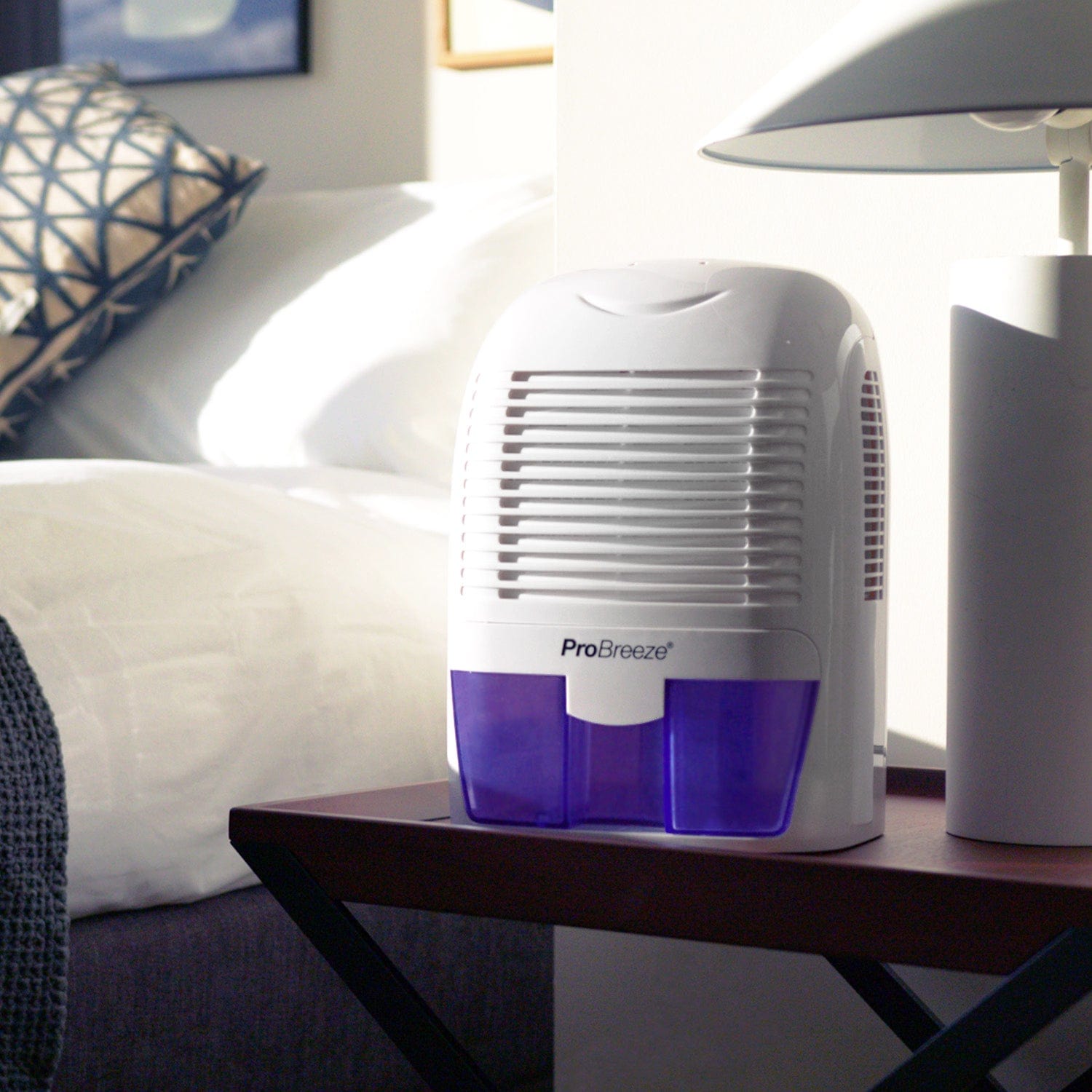
For a humidifier, compare mist control and how easy the tank is to fill and clean. The Pro Breeze 3.8 L Ultrasonic Cool Mist Humidifier has a dial that adjusts the mist. The 3.8 L figure is the amount its tank holds. For a dehumidifier, check room size, temperature and the job you need it to do. The OmniDry 12L is a compressor model. Its 12 L name refers to rated extraction per day under test conditions. Tank size is a separate specification.
For an electricity estimate, divide the rated power in watts by 1,000, then multiply by your price per kilowatt-hour and by the hours of use. At the rounded EU household average of €0.28/kWh, the 23 W humidifier costs about 0.64 euro cents per hour at rated power. The 200 W OmniDry 12L costs about 5.6 euro cents per hour at rated power. Your bill depends on your tariff and how much power the appliance draws at the selected setting. See our dehumidifier running-cost guide for further examples.


6Frequently asked questions
Could I need a humidifier and a dehumidifier in the same home?
Yes. A heated room may be dry while a laundry room has excess moisture. Work from a reading in each room. The same room can also behave differently through the year as heating, ventilation and household routines change.
Why are the windows wet if the room reading looks normal?
Glass can be colder than the surrounding air. Moisture can condense on it even when your meter, placed farther into the room, gives a moderate reading. Check whether the water is on the glass you can touch or between the panes. If moisture repeatedly appears between panes, ask a glazing professional to check the sealed unit.
Can a humidifier make a damp room worse?
Yes. It adds moisture to the air. If you already see condensation or record persistently high humidity, check the moisture sources and ventilation before adding any more.
Does having collected water mean the moisture problem is solved?
It shows that the dehumidifier has taken water out of the air. Keep checking the room after ordinary activities. If a stain or musty smell comes back in the same spot, investigate the source.
Take a reading in the room where you notice the problem, then look at how it changes as you use that space. Once you know which way you need to adjust the moisture, compare our humidifiers and home dehumidifiers.