
The quick answer
- How it works: a drain hose takes collected water from the dehumidifier to a lower drain by gravity.
- Which models: the OmniDry 10L, 12L Compact and OmniDry 20L Smart all support continuous drainage. Compare the connections.
- How to fit it: use the hose specified in your manual, keep it running downhill and check the connection during the first run. See the setup steps.
- When to use the tank: choose tank collection if the hose cannot reach a suitable drain below the outlet.

A dehumidifier with a drain hose sends the water it collects directly to a suitable drain. That is useful in a utility room where you regularly dry washing, or in a room where the tank often fills before you have finished using the appliance. The main thing to check before buying is whether water can travel downhill from the machine’s outlet to a drain. This guide shows which Pro Breeze models have that option and how to get the water flowing.
1How does a dehumidifier with a drain hose work?
A dehumidifier collects moisture from room air as liquid water. In tank mode, that water goes into the removable container. When the tank reaches its limit, the full-tank indicator tells you it needs emptying and the unit pauses dehumidification. With a hose attached to the drain port, the collected water has a path out of the machine.
The models in this guide use gravity drainage. Water flows from the appliance outlet to a lower point. The route matters from end to end. A hose that drops to the floor and then climbs over a high sink rim can hold water in the low section or stop it moving. Check where the hose actually ends as well as where it starts.
Continuous drainage describes where the water goes. The amount that comes out depends on the room conditions and the operating mode. A dehumidifier with an adjustable target can pause when the room reaches that target, so the hose does not necessarily drip all the time. Follow the operating instructions for your model.
2Which Pro Breeze dehumidifiers have a drain hose?
Look at room size and how much damp or laundry you need to manage first. Then check where the outlet sits and how you get to it. These three EU models illustrate the differences. Match the model code on your appliance to its manual before connecting a hose.
| Pro Breeze model | Where to start | What the manual shows |
|---|---|---|
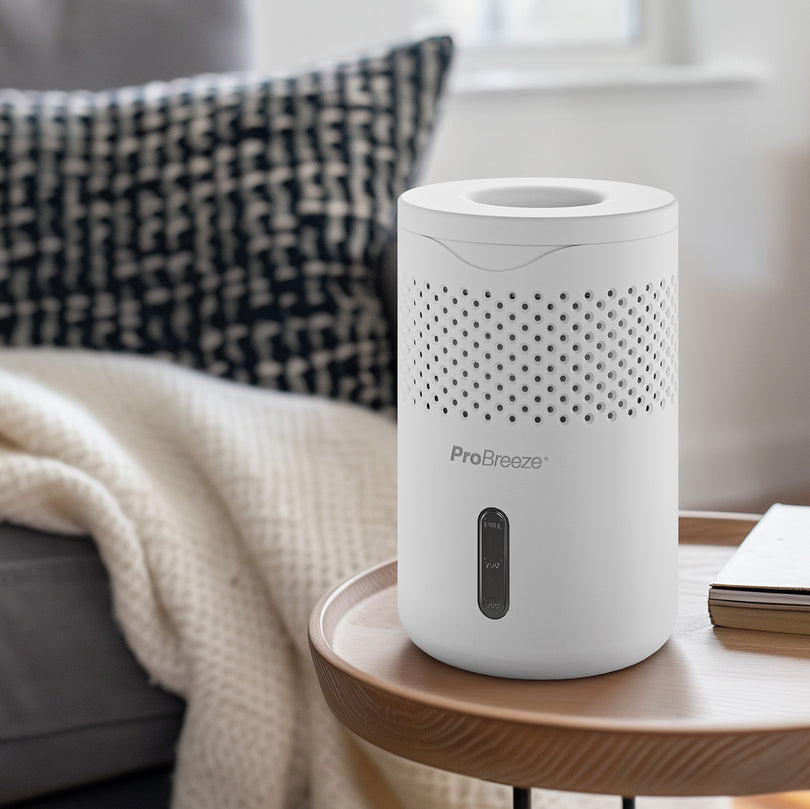
| OmniDry 10L (PB-D-40W-EU) | A compact option for rooms up to 12 m² as listed in the product specifications. | Fit the hose directly into the continuous drainage opening. The receiving point needs to be lower than the appliance outlet. |
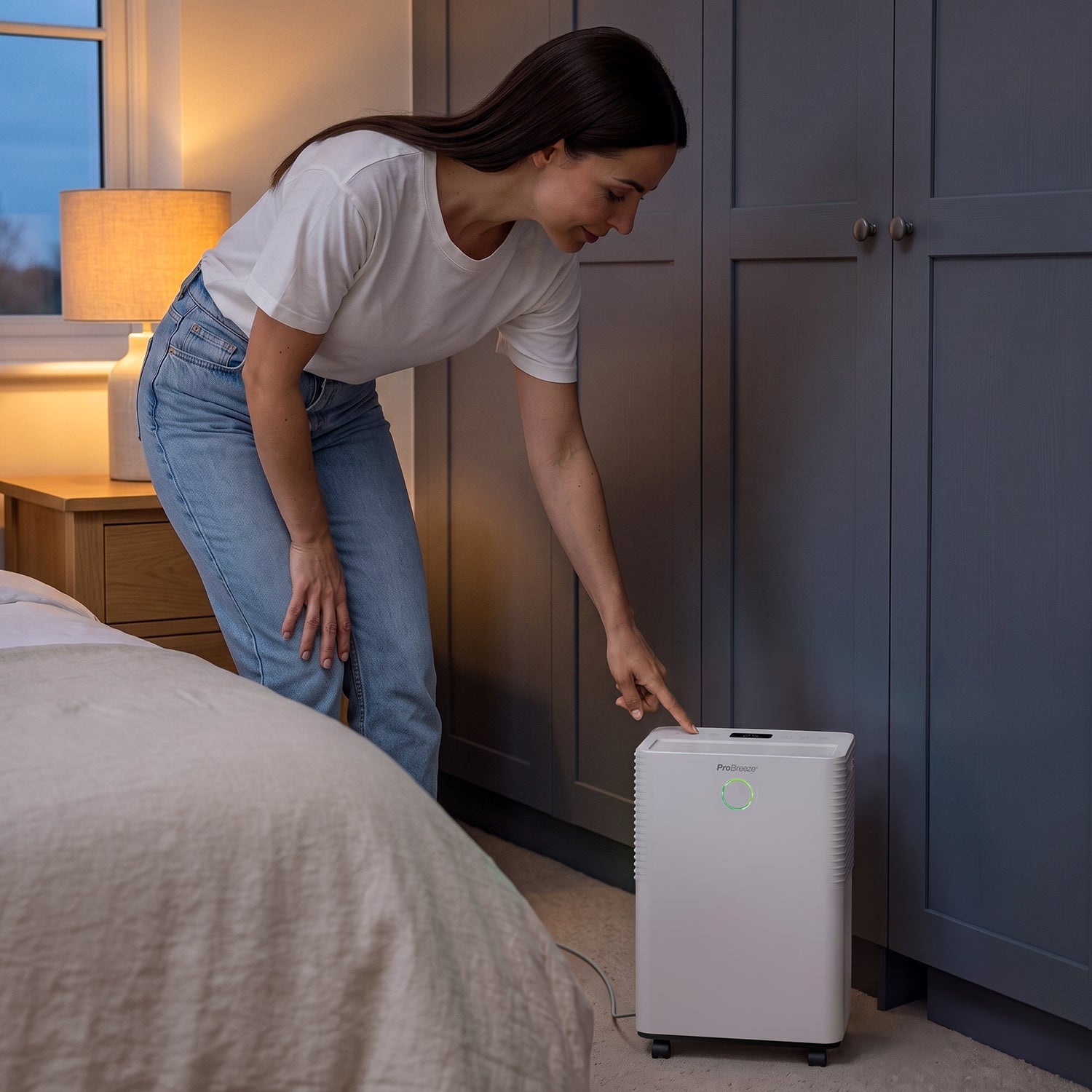
| 12L Compact (PB-D-27-EU) | A compact compressor model for a room that needs more extraction. | Take the tank out to fit the hose to the port, then put the tank back before running the unit. |
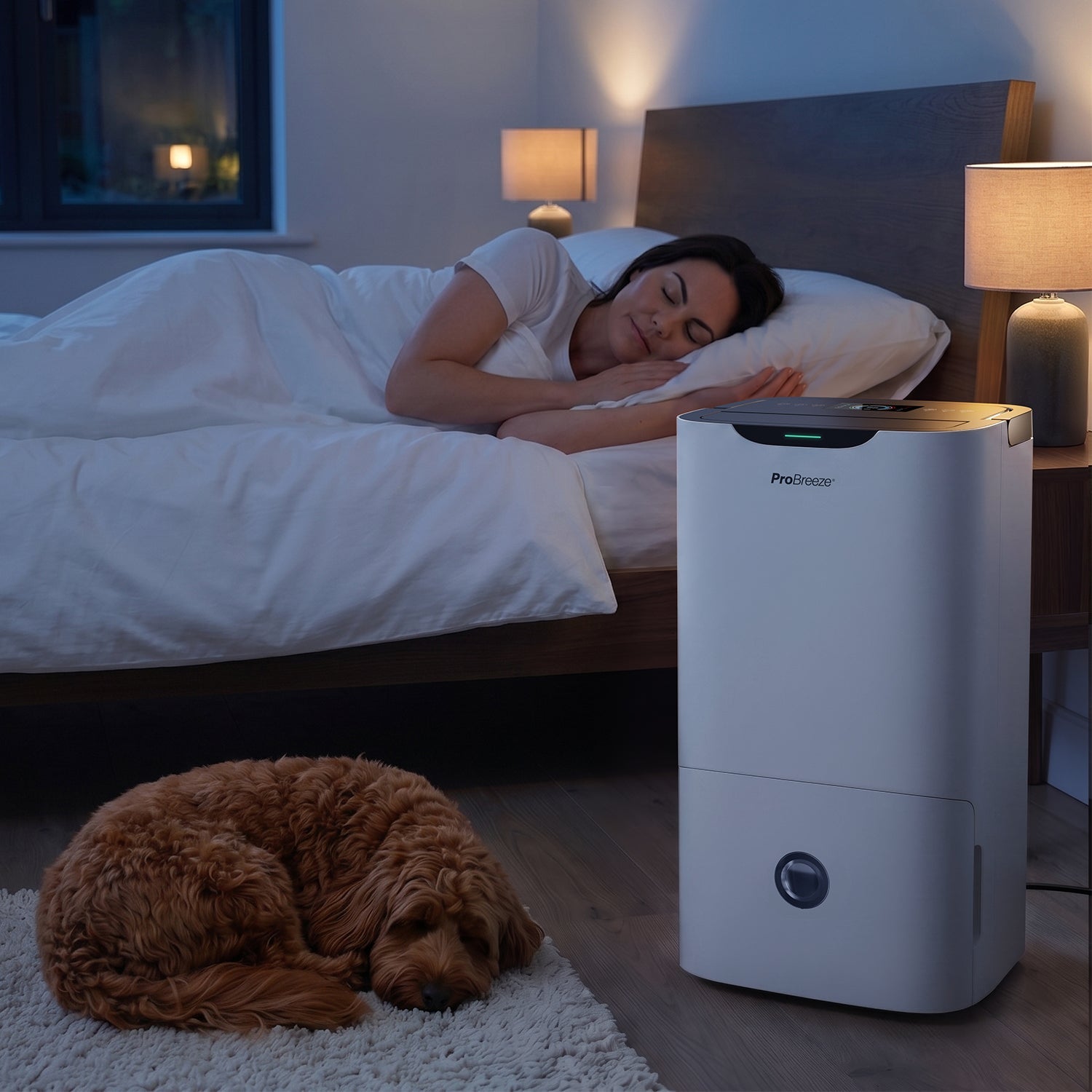
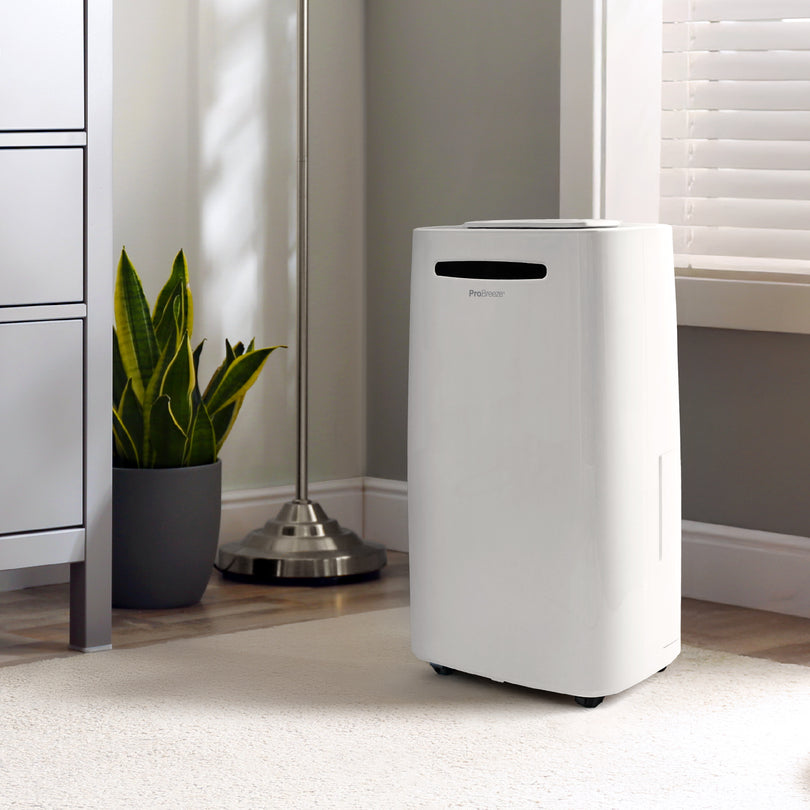
| OmniDry 20L Smart (PB-D-24-WF-EU) | A larger option for regular indoor laundry or a room with a higher moisture load. | Pull out the rear tank to reach the drainage opening. Connect the hose securely and keep its route clear. |
Hose length and fittings vary. Use the hose specified in the instructions for the exact model. If your only drain is higher than the outlet, plan to use the tank with these models.
At the EU household average of €0.28/kWh, the OmniDry 10L (160 W rated) costs about €0.18 for four hours at rated power. The OmniDry 20L Smart (330 W) costs about €0.37 for the same example. Multiply the power in kilowatts by the hours of operation and your tariff. The hose changes where the water collects. Use the same calculation for either collection method. See our dehumidifier running cost guide for more examples.


OmniDry 10L Quiet Compact Space Saving Low Energy Dehumidifier with Laundry Mode
€109,99
€139,99
3How to connect a dehumidifier drain hose
- Switch off and unplug the appliance. Set it upright on a stable surface. Open the drainage section of the manual before taking out the tank or opening a capped port.
- Fit the specified hose. Locate the drain outlet using the manual’s diagram. Seat the hose securely. If the instructions call for removing a cap or plug, keep it for switching back to tank collection.
- Refit the tank as directed. The tank may need to be in place even though water exits through the hose. For the 12L Compact, the manual explicitly tells you to put the tank back after connecting the hose.
- Route the hose to the drain. Give it a clear downhill path without a kink, tight bend or upward loop. Place the outlet where water can flow freely. If the manual allows a bucket, remember that the bucket has a finite capacity and has to be emptied.
- Check the first run. Look at the connection and the floor beneath it. Confirm that water reaches the receiving point once the appliance starts extracting moisture. If you see a leak, switch off and unplug before checking the fit and route again.
4Why is water still going into the tank?
Start with the hose connection and route. Switch off and unplug the unit before making changes. A hose can appear to be attached while sitting only partly on the outlet. Reseat it as the manual shows, then check the whole length for a kink behind the unit, a blocked end or a section that rises before the drain. Check whether the tank is fully seated as described in your manual.
If there is little water in either the tank or the hose, consider whether the unit is extracting moisture at that moment. The humidity setting may already have been reached, or a compressor model may be in its automatic defrost cycle. See the cold-room dehumidifier guide if the room is routinely chilly. For a repeated leak or fault after the hose has been fitted as directed, contact Pro Breeze with the model number and a photo of the connection and route.
5When to switch back to the water tank
Tank collection is useful if you move the dehumidifier between rooms or have no drain in the right place. Switch off and unplug before disconnecting the hose. Have a container ready for water left in the hose. Refit any cap your manual specifies for tank mode, empty the tank and slide it back into place. After restarting, check that water collects in the tank and the connection area stays dry.
If you dry washing in a fixed spot with a suitable drain, a hose saves a separate tank-emptying step. If the airer moves from room to room, using the tank can be simpler. For the rest of the setup, see how to dry clothes indoors with a dehumidifier.
6Frequently asked questions
Does a dehumidifier with a drain hose need a pump?
The three models above use gravity. They need a receiving point below the drain outlet. If the only route requires lifting water, use tank collection or ask about a model expressly designed for that setup.
Can I use a longer hose?
Check the instructions for the correct hose and any limits on length. The hose must fit securely and reach with a continuous fall. Ask Pro Breeze about an approved replacement if the specified hose cannot reach.
Does a drain hose make the dehumidifier extract more water?
The hose changes how you collect the water. The appliance’s rated extraction stays the same. Actual extraction varies with temperature, humidity and operating mode.
Ready to compare sizes? Explore Pro Breeze home dehumidifiers or use the 13-step dehumidifier buying guide to decide what suits your room.
Model references: OmniDry 10L manual, 12L Compact EU manual and OmniDry 20L Smart EU manual. Electricity: Eurostat household electricity prices (EU average, first half of 2026, including taxes).
Last reviewed 19 November 2026.